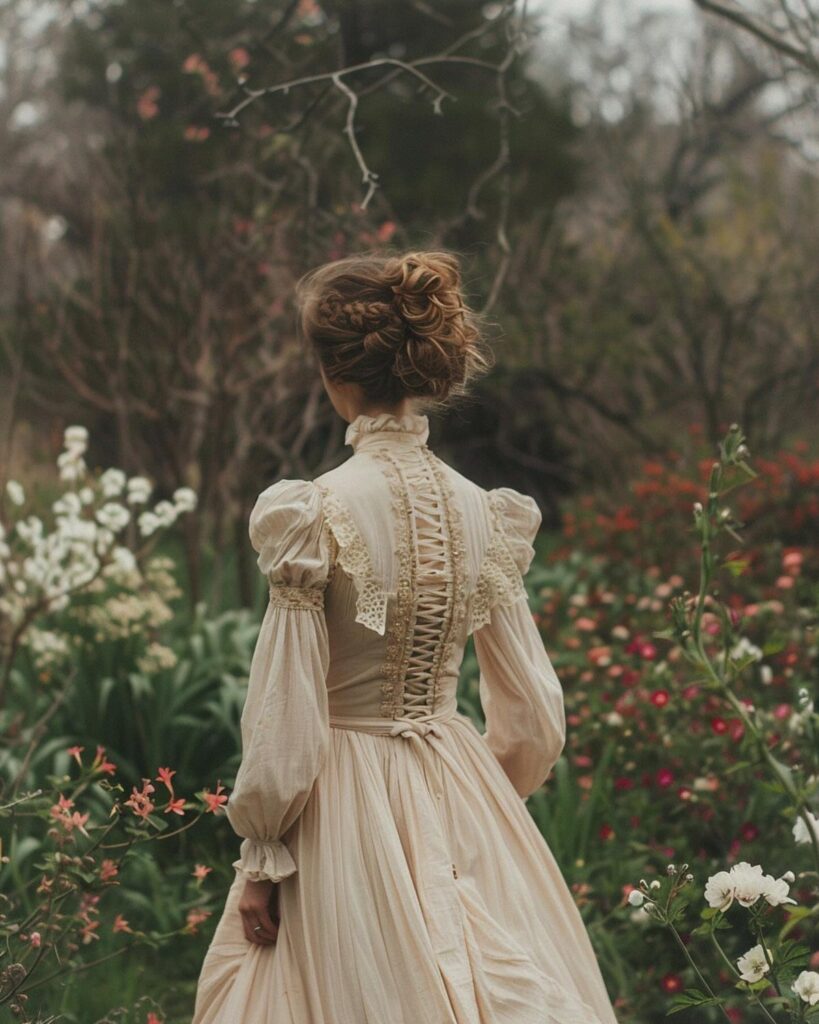
Which of these looks suits you depends on the decade and the social position you’re dressing for, since Queen Victoria reigned 64 years, from 1837 to 1901, and the silhouette shifted a lot across them.
The ideas run from a brown dress with a ruffled blouse to a green and cream laced gown, a purple gown with a bonnet, and a black dress with a fur collar.
Pick the decade first, using the timeline and the fashion influences, then match fabric and trim to the look you want, and the rest of the outfit follows.
1. Victorian Men’s Clothing
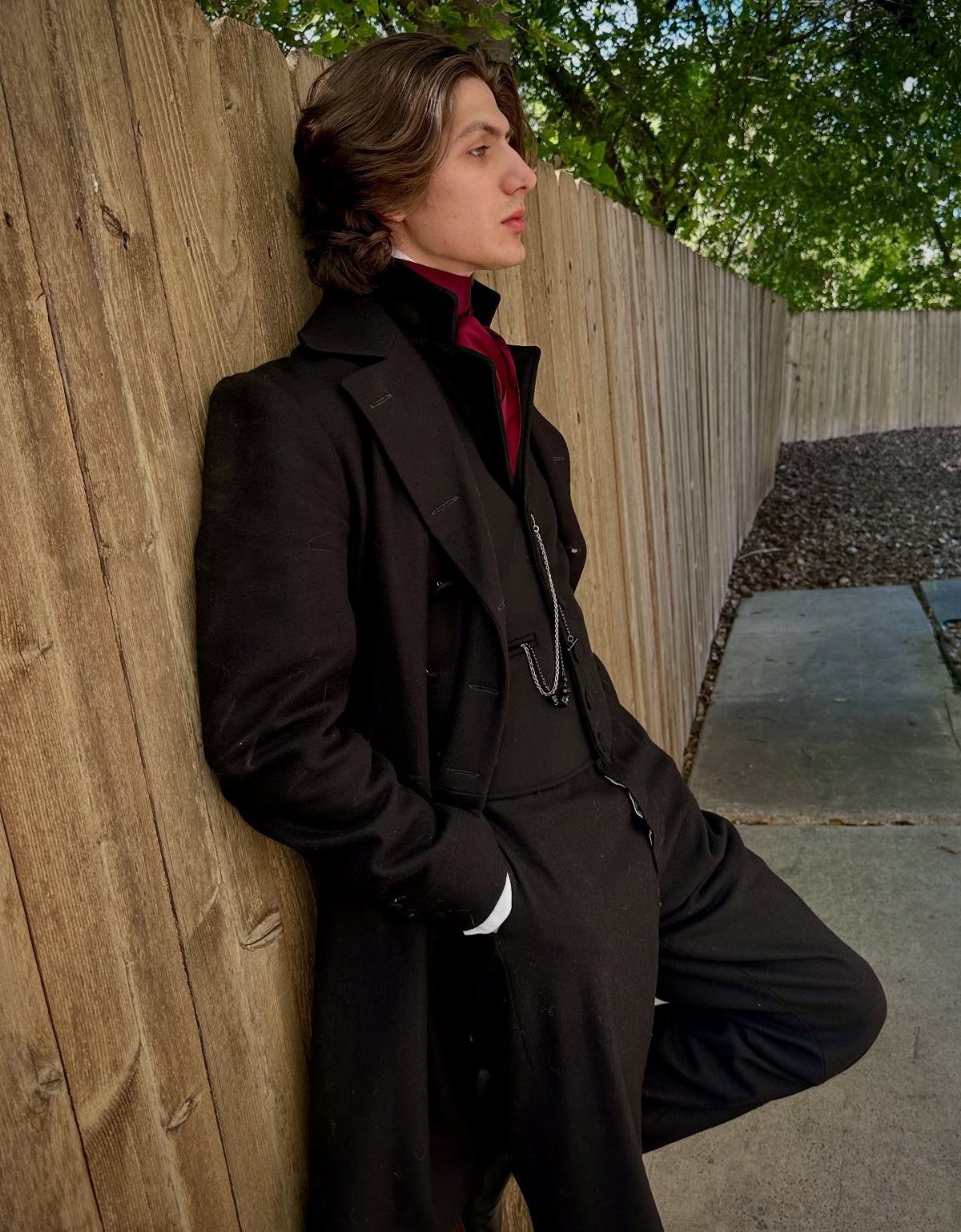
One bright accent against all that black reads as Victorian faster than any extra layer would.
For a costume or a research reference, I would start with the cravat. It is the cheapest piece to swap, and it lets the same dark suit look formal or a little dashing.
Keep the 3 pieces in the same black so the coat line stays clean.
2. Children’s Clothing
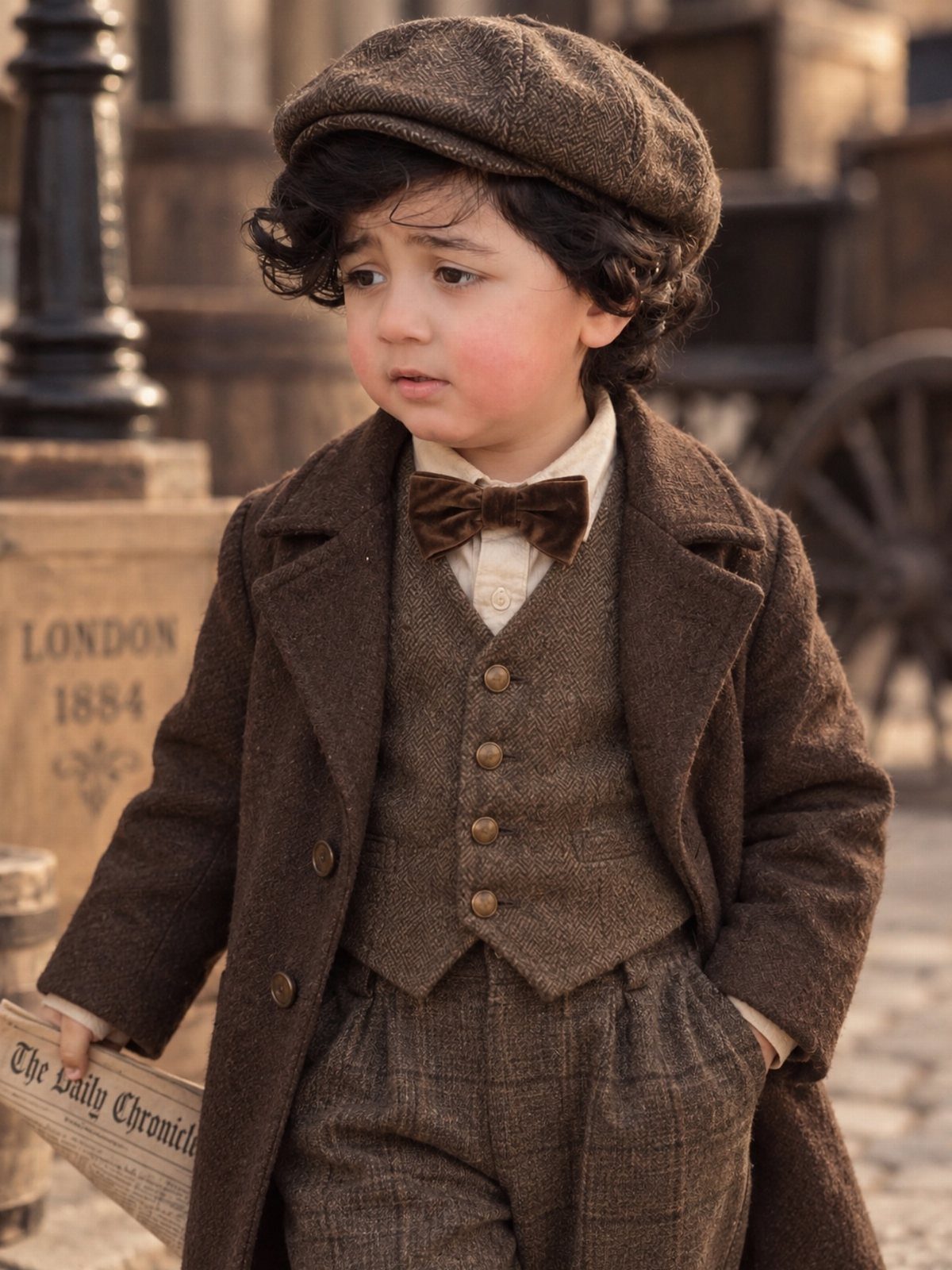
Victorian boys were dressed as miniature men: tweed jacket, vest, bow tie and a flat cap, all in the same earthy browns and scaled down to size. Children’s clothing of the period copied adult tailoring closely, just in smaller sizes.
If you are dressing a child for a school event or a photo, a matching suit, vest and cap in one earthy brown looks the most convincing. Add a folded newspaper as a prop.
Check the cap fit first, since a loose one slides over the eyes within minutes.
3. Green and Cream Laced Gown
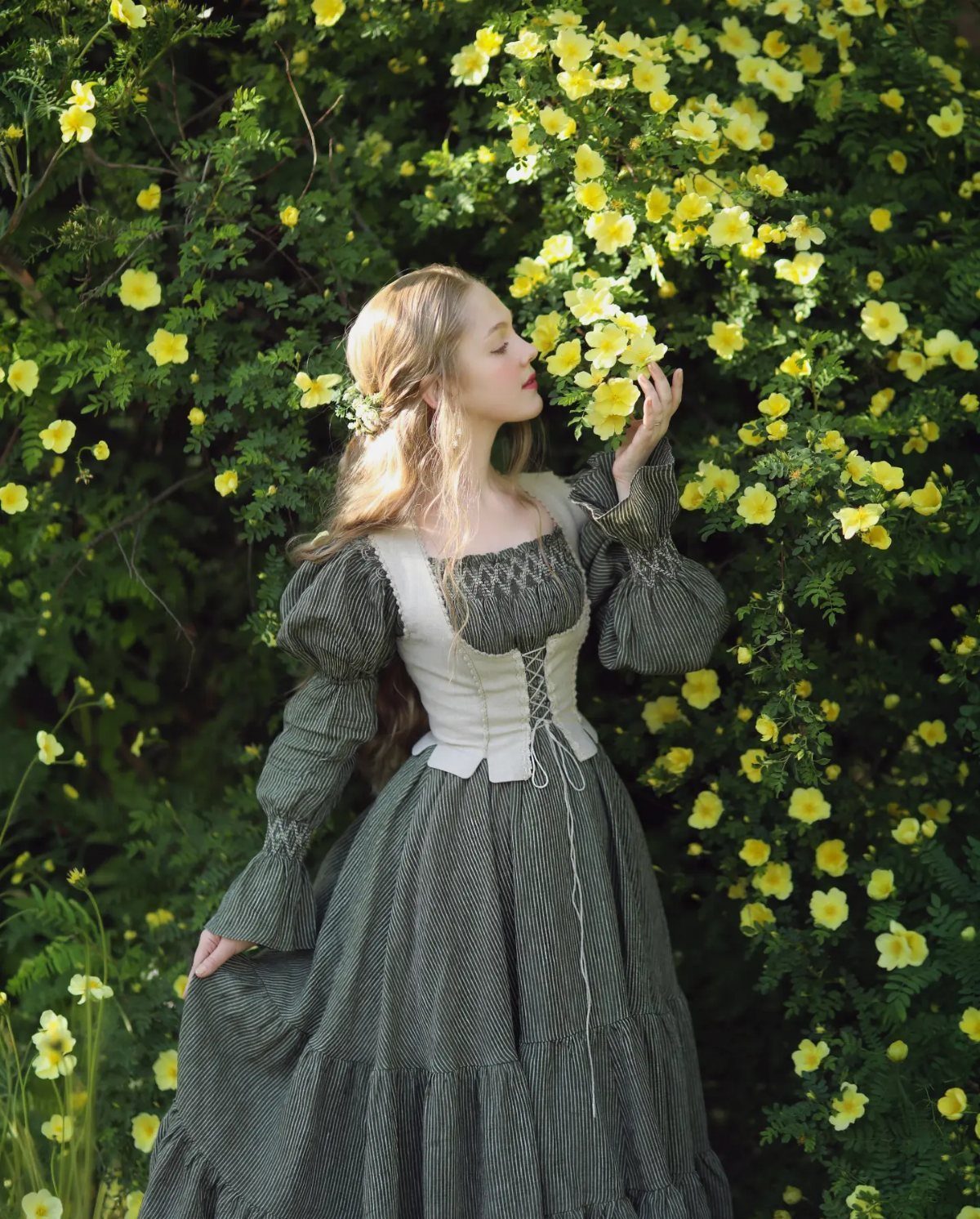
Olive green stripes against a cream laced bodice make a combination I would pick over black or navy any day. The full patterned skirt carries the color, while the lacing gives the top half its shape.
This one suits outdoor settings, gardens especially, because the green blends in with the leaves and flowers.
If you are sewing it, keep the bodice cream and plain so the skirt pattern can be the loud part. Lacing is also forgiving on fit, since you can adjust it through the day.
4. Brown Checkered Dress with Vest
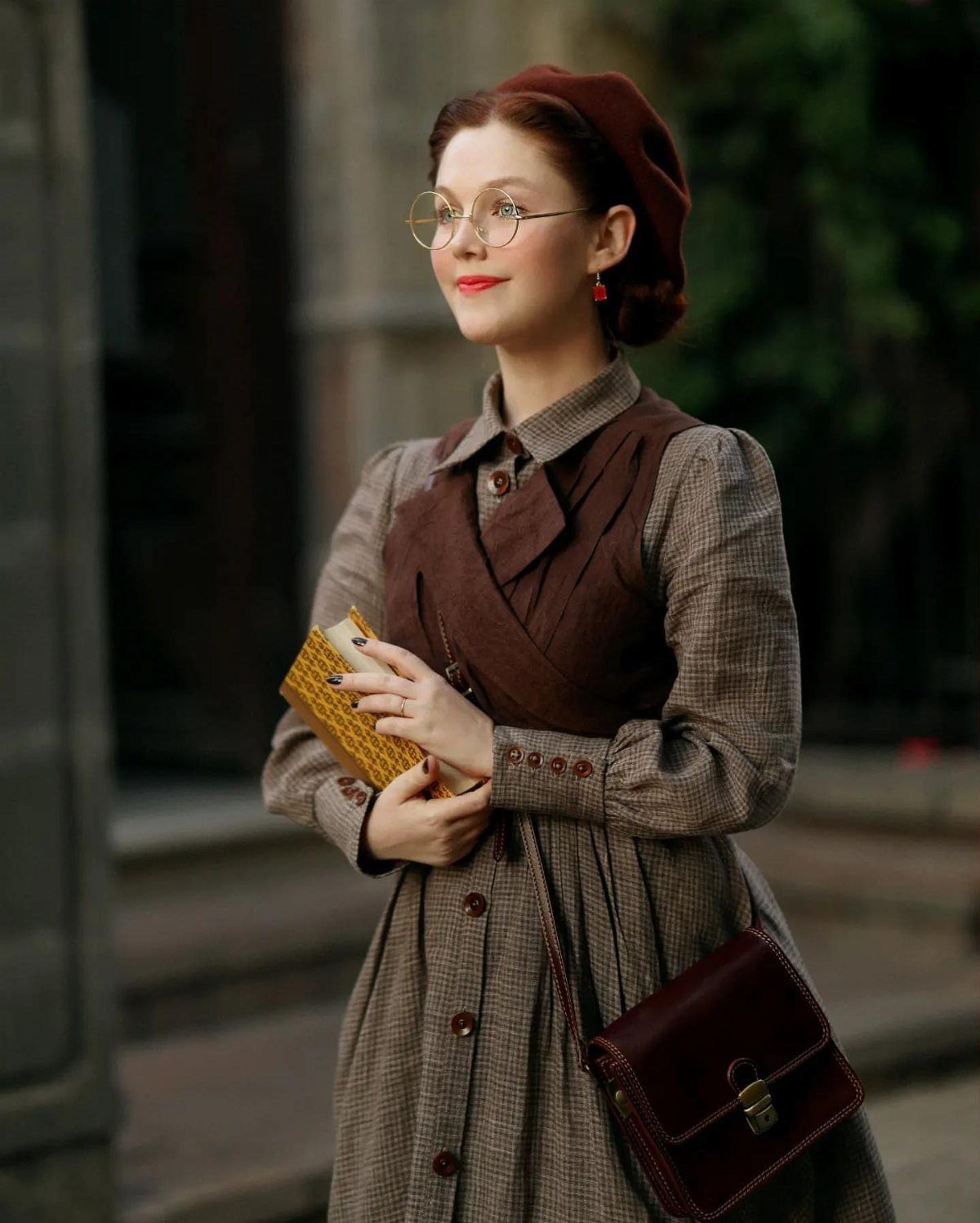
Brown checks, a tailored vest, a leather satchel and a red beret: this is the Victorian look that works as a real outfit. Layering the vest over a patterned dress gives structure without a corset showing.
I like it for anyone who wants period style that still looks wearable on a walk or at a library.
The red beret is the single accent, so keep everything else brown. Glasses and a yellow book fit in naturally, and a satchel beats a handbag for carrying things.
5. Structured Grey Bodice Dress
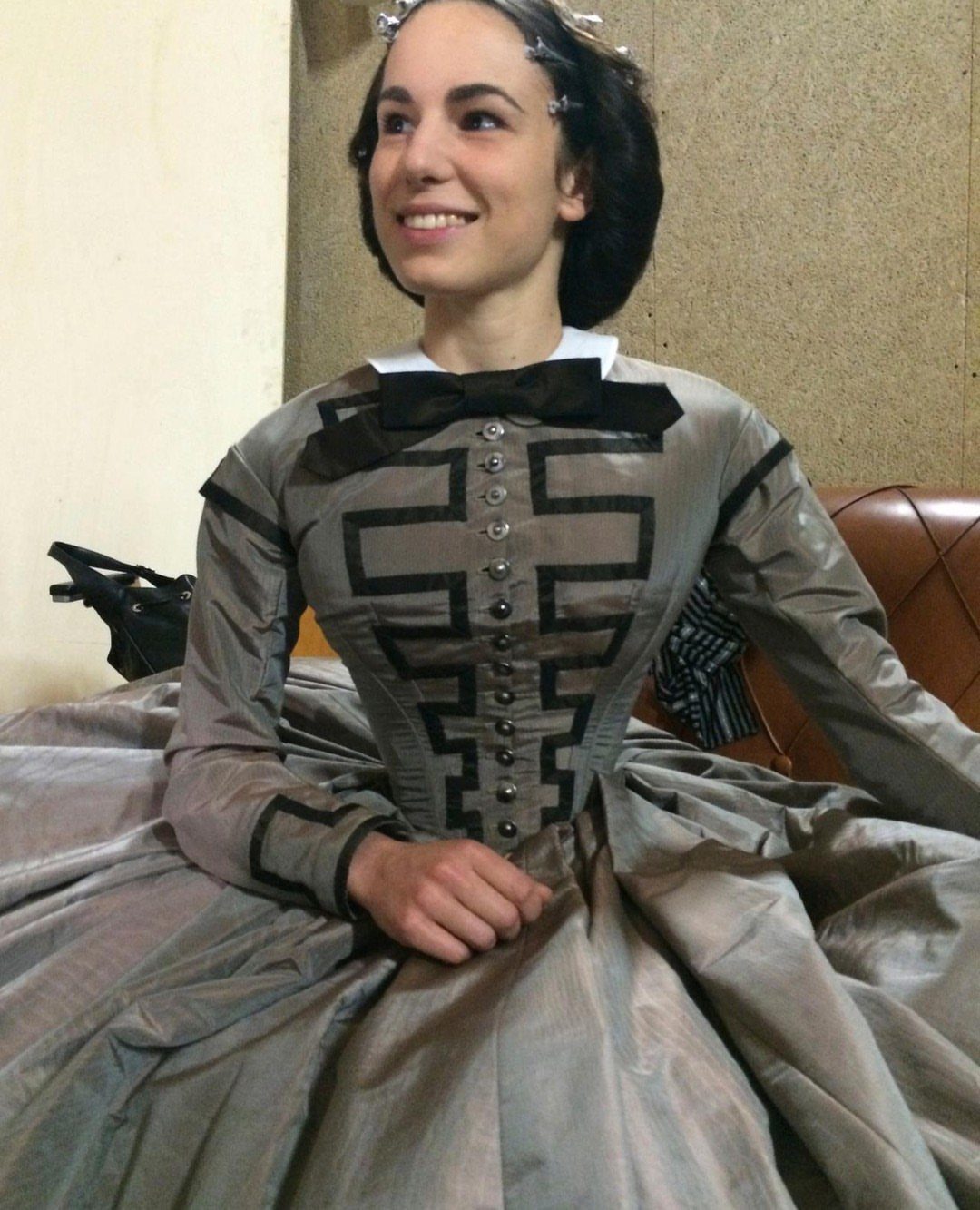
Grey is the quiet choice, and black geometric trim along the bodice keeps it from looking flat. A neck bow finishes the top, so the whole dress reads as sharp and structured.
For someone who finds pastels too sweet, this is my pick. Wear it seated or standing; the full skirt holds its shape either way.
When making or buying one, look at the trim placement first. Crisp lines on the bodice matter more than anything on the skirt, because that is where the eye lands.
6. Floral Bodice Pleated Day Dress
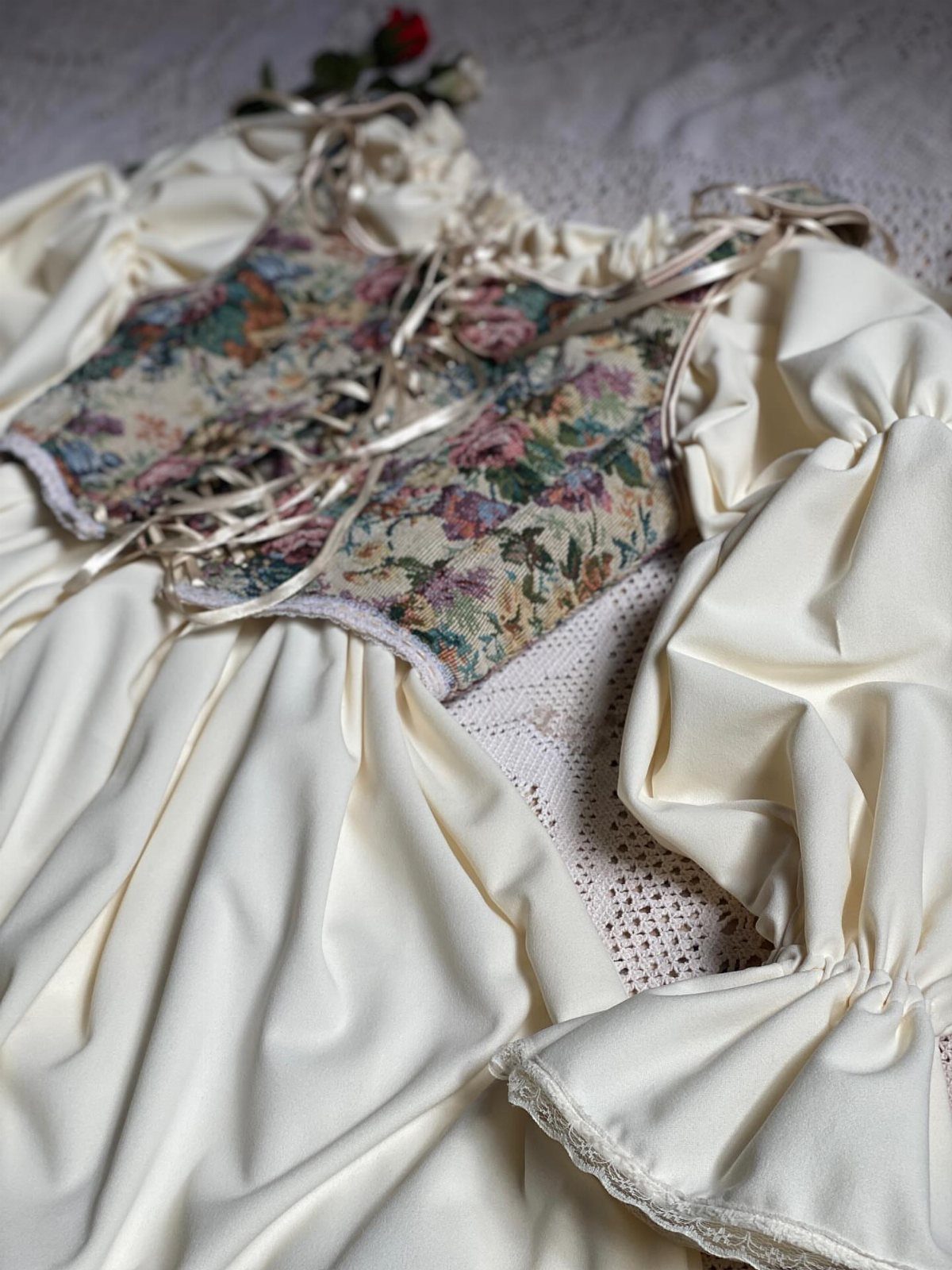
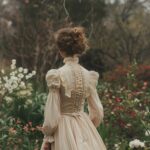
Cream, ribbon lacing, floral detail and big voluminous sleeves: this day dress puts all its drama in the bodice and arms, then calms down in a pleated skirt.
Pleats are the practical part. They give the skirt fullness without a lot of added decoration, so the sleeves and ribbon get the attention.
If you want to wear it, keep accessories minimal. Cream shows every mark, so store it laid flat, the way it appears here, rather than crushed on a hanger.
7. Brown Dress with Ruffled Blouse
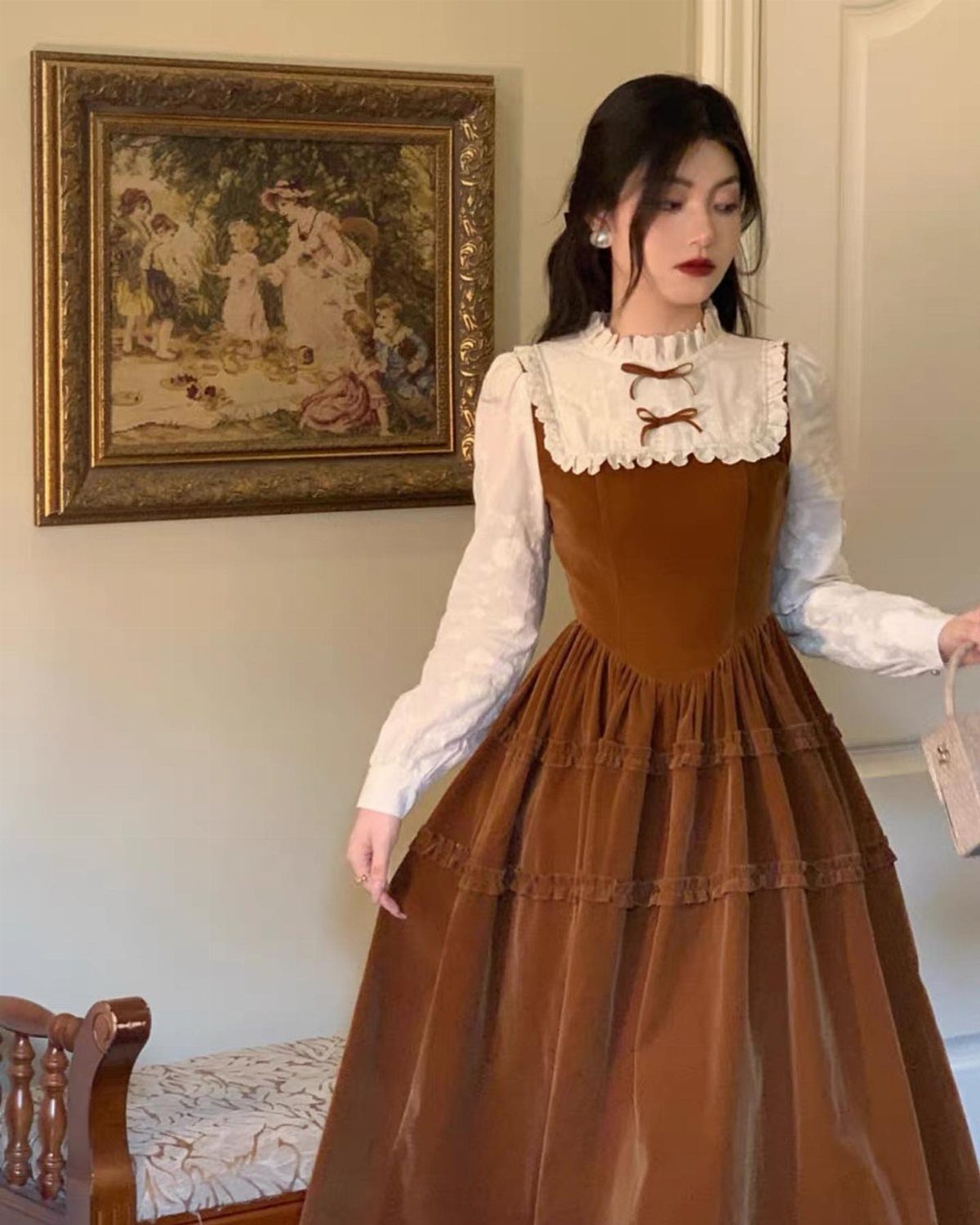
A brown pinafore over a high-neck ruffled white blouse is the easiest Victorian-style outfit to build from separate pieces. The blouse does the period work with its ruffles, and the pinafore keeps the look plain and sturdy.
I would pick this over a full gown for a first costume. Both pieces can be worn apart, so nothing sits in the closet after the event.
Choose a blouse with ruffles at the collar and keep the pinafore in one plain brown.
A plain wooden chair or a framed painting behind you is enough of a backdrop, so skip the extra props and let the brown skirt and ruffled blouse do the work.
8. Floral Corset Dress Over Blouse
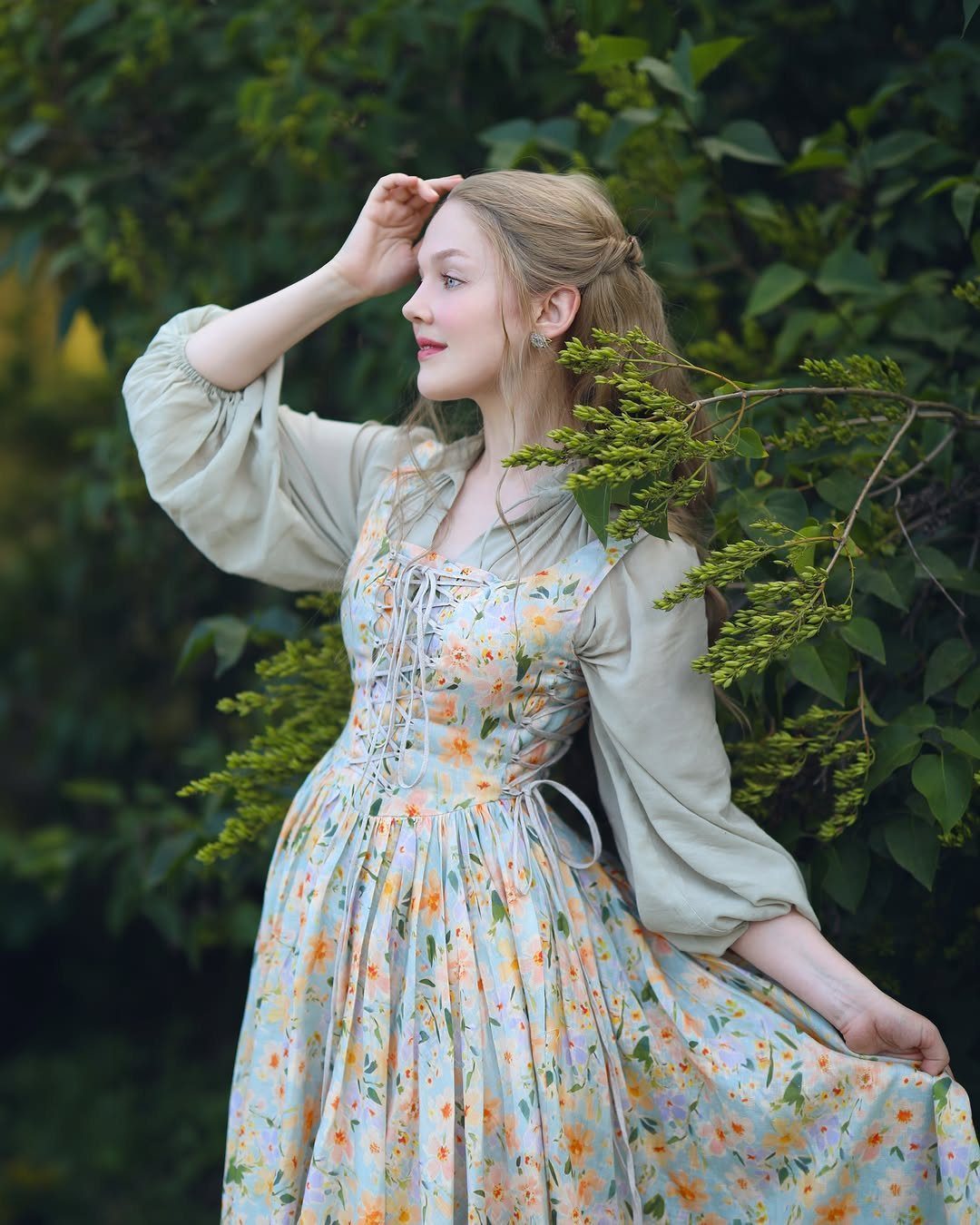
Light blue florals on a laced bodice, worn over a soft green long-sleeved blouse, make a gentler combination than the dark palettes most people picture.
The blouse fills in the arms and neckline, so the dress itself can stay sleeveless on top.
I like the green under blue because the 2 colors sit close together and neither fights the flowers.
Pick a blouse in a plain, soft shade so the print stays the focus. Greenery makes a good backdrop, since the pale tones look fresh outdoors.
9. Purple Victorian Gown with Bonnet
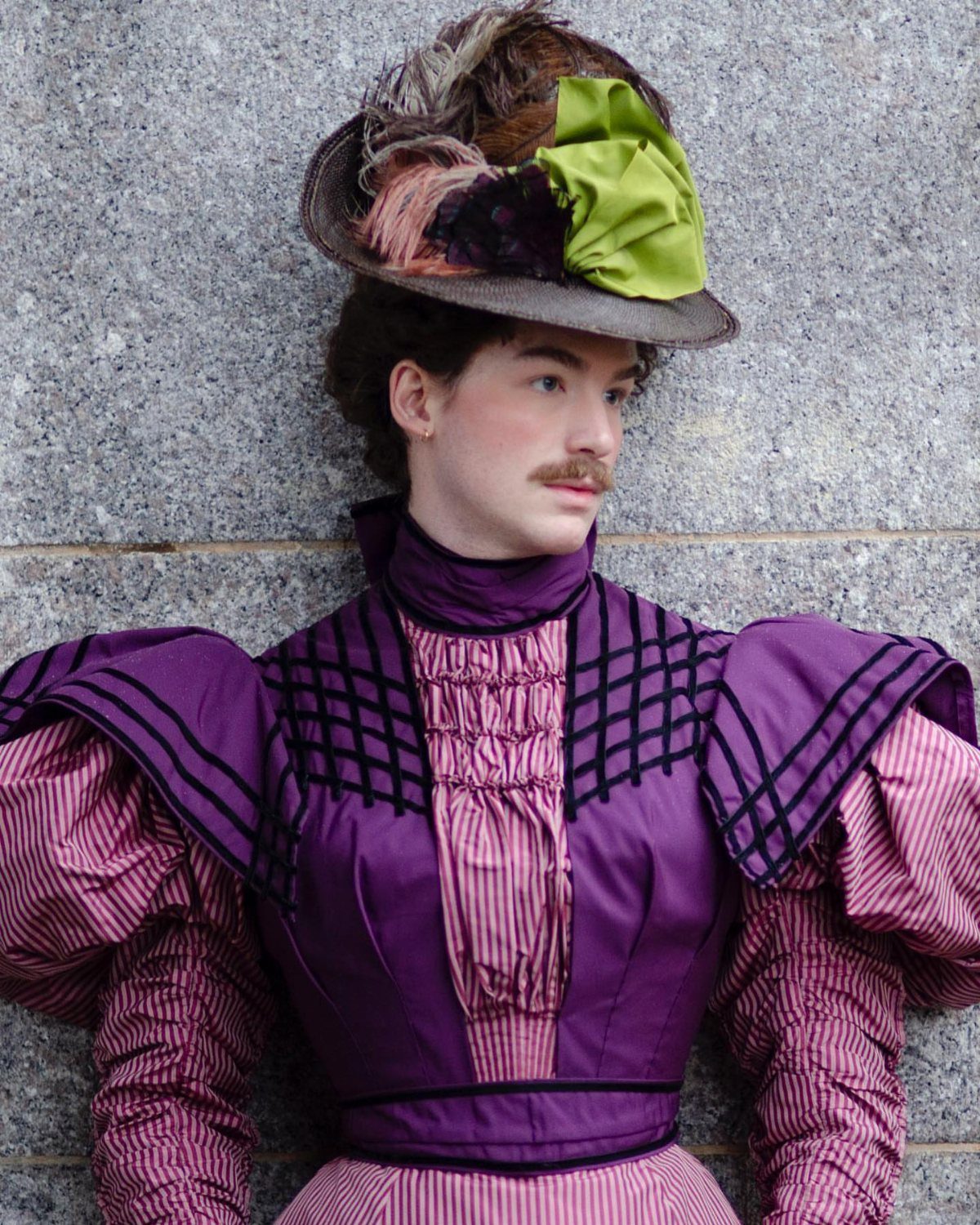
Purple and pink stripes under a decorative hat: this gown proves Victorian clothing was not all black and brown. The stripes give a long skirt plenty of movement, and the hat keeps the whole look anchored.
It suits anyone who wants a bold costume, and it does not need a particular face or figure to work. A grey stone wall behind it makes the colors stand out more.
Match the hat to one of the two stripe colors so it reads as part of the outfit. Keep jewelry quiet.
10. Pink Floral Puffed Sleeve Gown
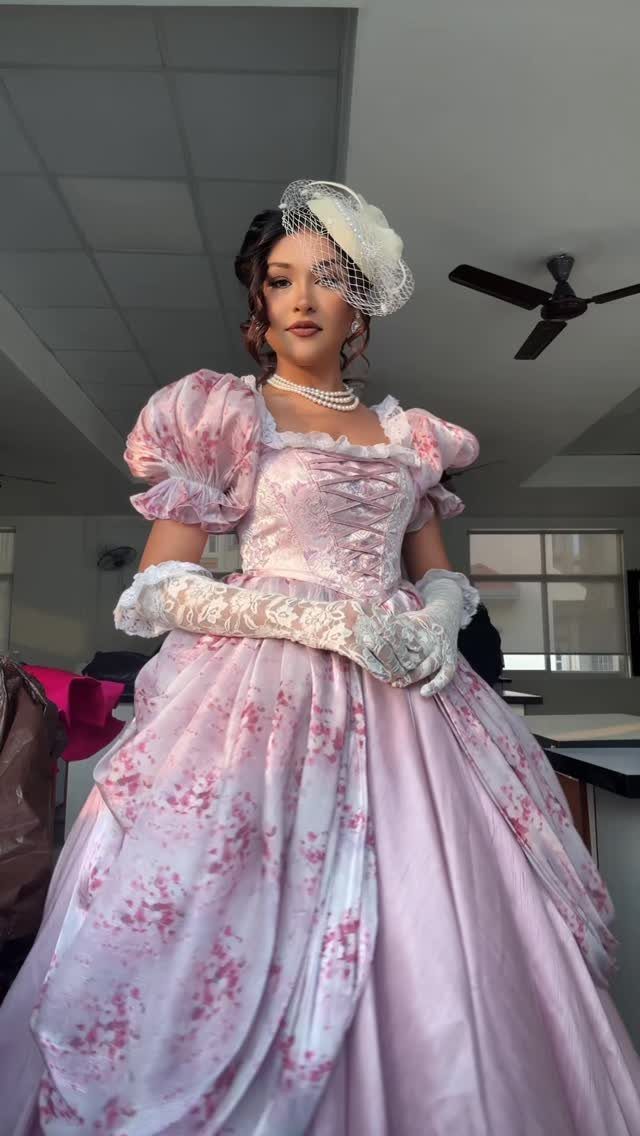
Puffed sleeves, lace gloves and a netted fascinator turn a pink floral gown into a full tea-party outfit. Each accessory adds a different texture: soft florals, open lace and fine netting.
I would spend the effort on the gloves and the fascinator before upgrading the gown. They change the look more than another layer of fabric would, and they are easy to swap if you rewear the dress.
Keep the gloves light and the fascinator small enough to sit still. With sleeves this full, anything bulky on top will crowd the shoulders.
11. Black Dress with Fur Collar
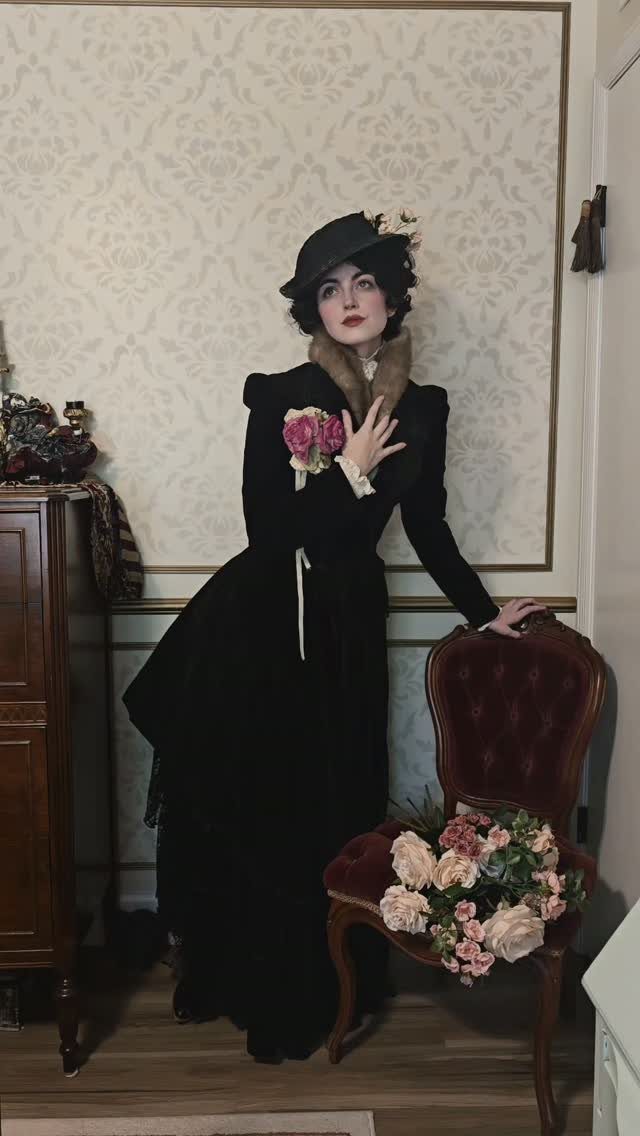
A black full-skirted dress, a matching black hat and a brown fur collar: the collar is the one warm note in an otherwise dark outfit. It breaks up the black near the face, where it counts.
For a winter portrait or a formal event, this is the version I would choose. Matching the hat to the dress keeps everything clean and serious.
Fur is the pricey part, so a faux collar in a similar brown is the practical swap. Keep it the only brown piece, and let the skirt provide the volume.
Victorian Fashion Timeline
Queen Victoria sat on the throne for 64 years, from 1837 to 1901, so a costume can land in very different decades, and the silhouette changes a lot across them.
Early on, a style lasted about a decade. By 1901, mass production and faster communication had pushed fashion into a yearly cycle.
Before you buy anything for a costume, settle on a decade.
Illustrations from the last 20 years of the century can be dated to within a year or two, so a mismatched sleeve or skirt shape gives you away to anyone who knows the period.
If you do stage or re-enactment work, remember that each decade has clear differences in dress. Study crinolines, bustles and the S-bend corset shapes first, because those silhouettes separate one stretch of the era from the next.
Fashion Influences
Money and class set what people wore. The richer the household, the fancier the outfit, so a plain, sturdy look suits a working or poor character, and an elaborate one suits a wealthy lady.
Decide which social position you are dressing for, then match the fabric and trim to it. Mixing a poor child’s simple clothes with showy accessories reads as a mistake.
Industrial change also pushed back on fashion.
Looser, simpler lines work better than heavy shaping if you want a reformer’s look in a costume.
Dressing Process
Getting dressed took a long time, and wealthy women often needed help with the many layers. Tight corsets are the best-known example, and they are why the period’s silhouettes look the way they do.
If you are wearing a costume, plan for the time. Lay out every piece in order before you start, and ask someone to help with lacing and back fastenings.
Dress in layers you can manage alone if no helper is around. Leave extra time before photos or an event, since rushing the process is how seams split and ribbons tangle.
Skip anything tight enough to make breathing or sitting uncomfortable. A costume should be worn comfortably, even when the original was not.
Frequently Asked Questions
What did they wear under Victorian dresses?
Corsets, petticoats and other undergarments sat under the dress.
Corsets get the fame, and they earned it: laced snug over a chemise, they pulled the waist in and built the hourglass shape most people picture when they think of the era.
Wealthy women often needed help getting through all of it.
What years did the Victorian era span?
The era ran from 1837 to 1901, the 64 years Queen Victoria was on the throne.
Styles changed a lot over that stretch. A style held on for roughly 10 years in the early decades, then factory production and quicker news cut that to about 12 months by 1901.
How did fashion change during the Industrial Revolution?
Mass production and faster communication sped up style changes.
A look that once lasted about a decade turned over yearly by 1901. Reformers pushed against the heavy, shaped styles, so if you want that look in a costume, go with looser, plainer lines and skip the structure.