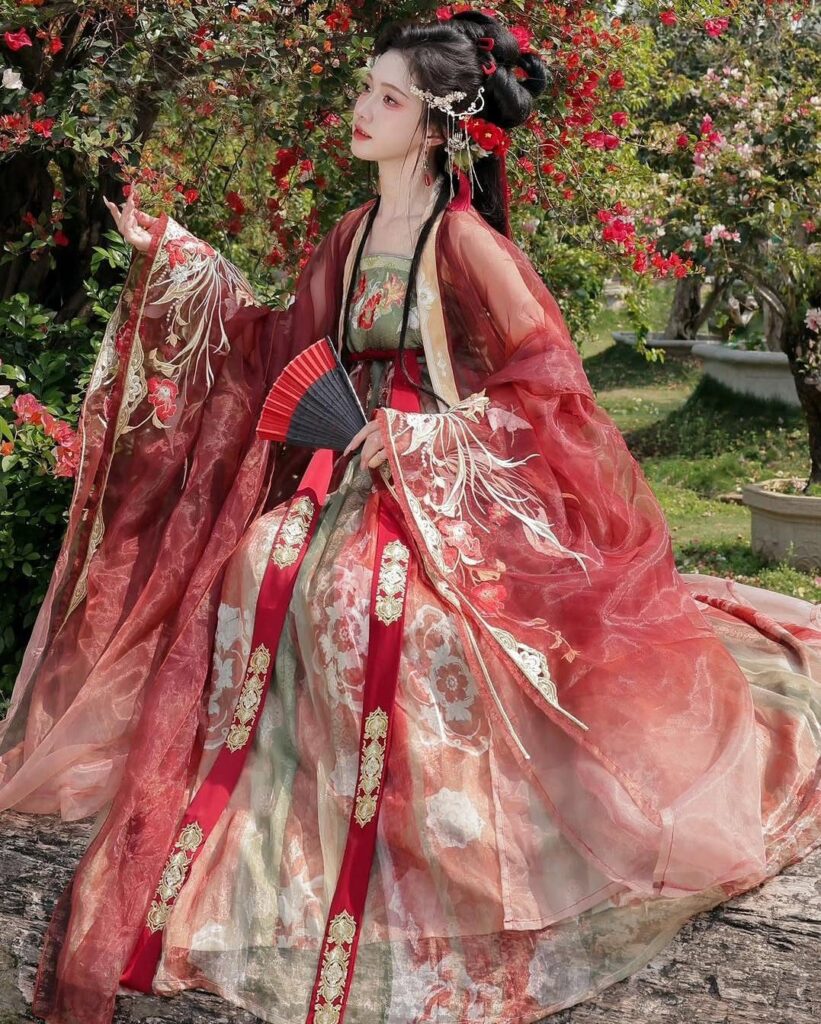
How much costume you want decides which of these 5 clothing styles is yours: Hanfu sits at the full-costume end, while the track jackets sit at the everyday end.
Hanfu sits at the far end, where the outfit is the event, while a frog-button track jacket in cream, black, olive, navy, or maroon slips in next to jeans and sneakers.
In between, the embroidered qipao dress is the dressy pick, and the embroidered mandarin collar jackets suit daytime. Match the piece to the occasion, and the history behind these shapes will show up in whichever one you choose.
1. Hanfu
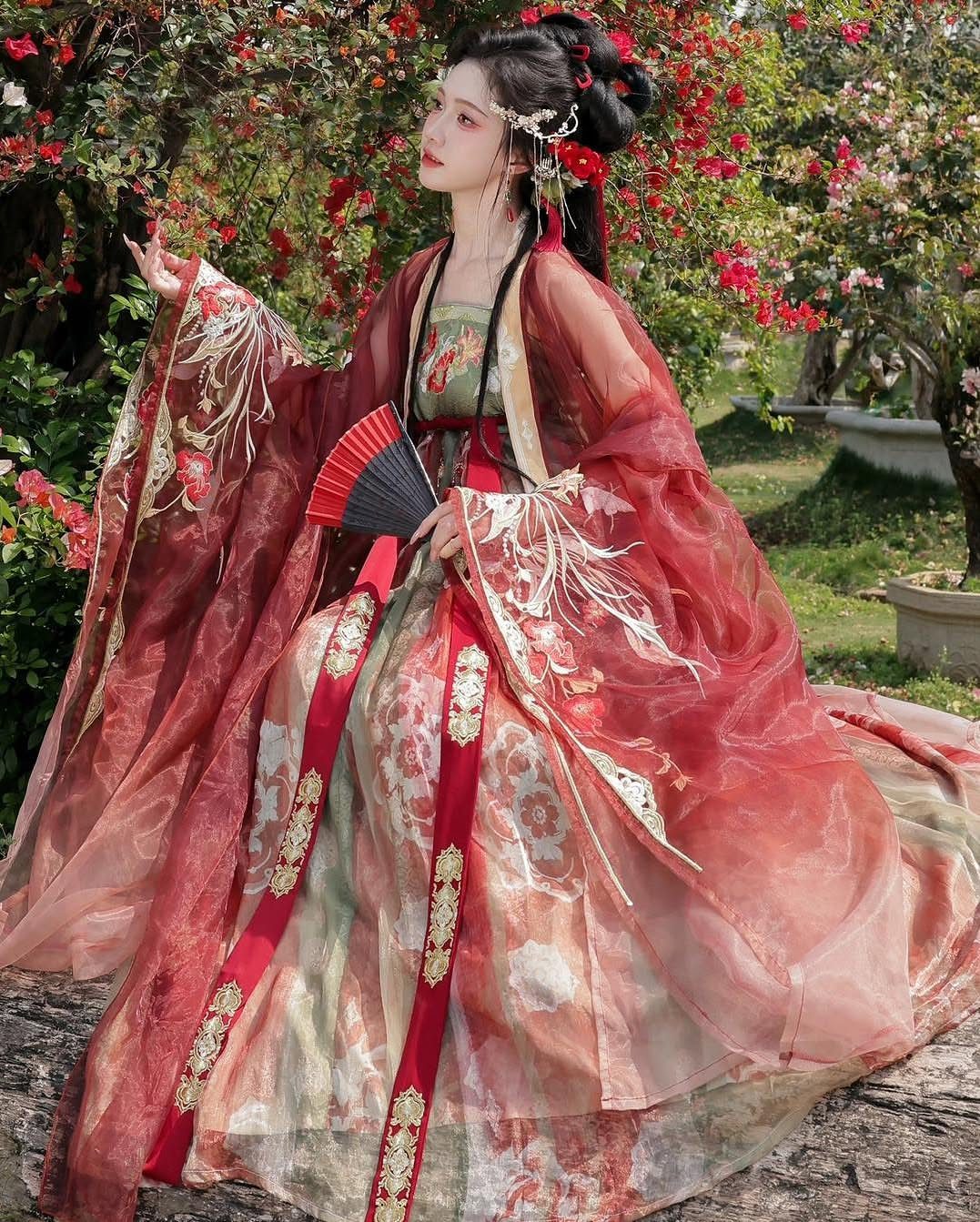
A fan is a small add-on that makes the outfit feel finished.
Hanfu is my pick for the most traditional look, since it leans furthest from everyday Western clothing. Wear it for a photo shoot, a festival, or any occasion where you want the outfit to be the event.
2. Guochao Clothing
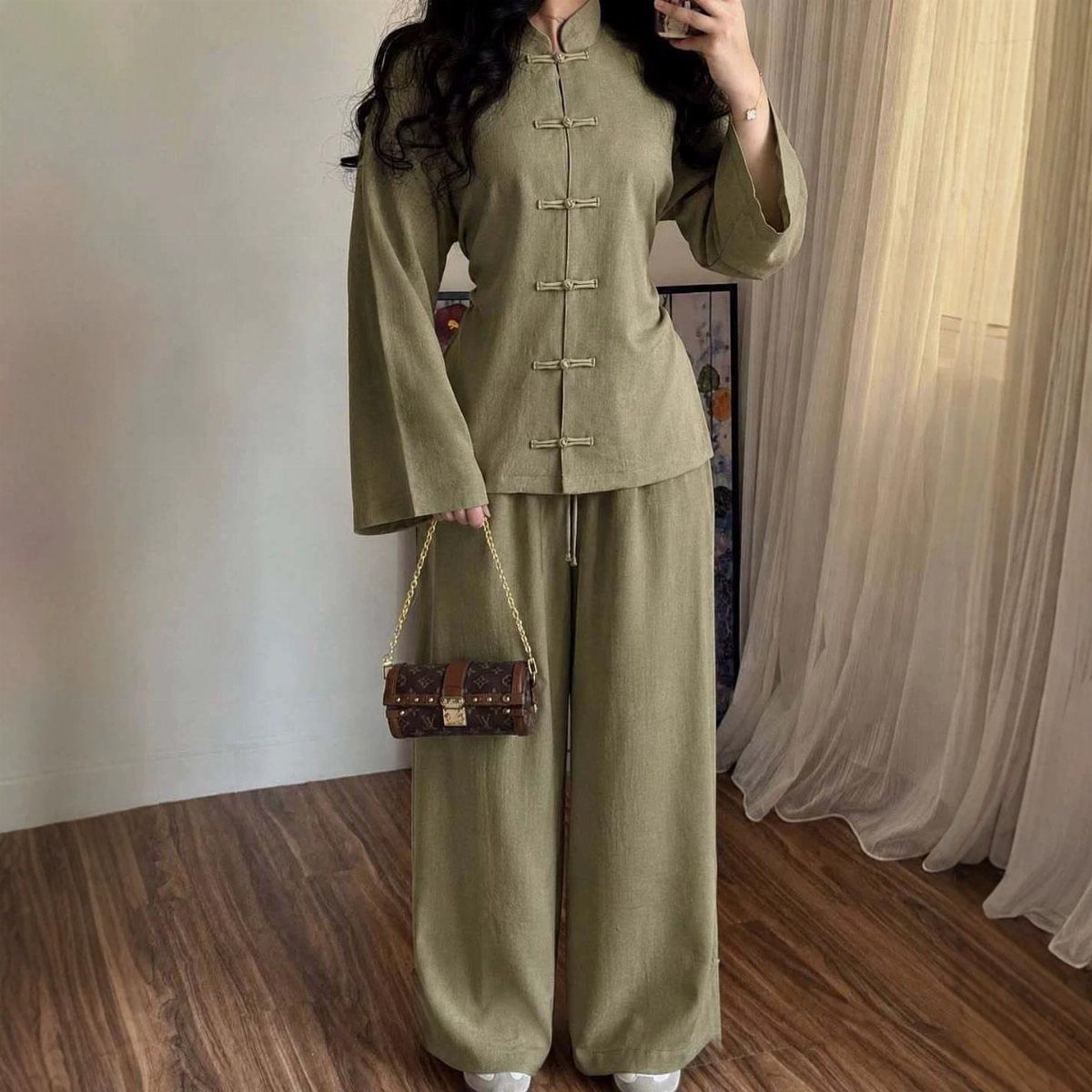
Guochao is the most wearable idea here, because a matching set does the work for you. A mandarin collar and frog buttons on the top, with trousers in the same sage green, read as Chinese inspired without any costume feel.
Olive and sage tones keep it quiet. I like pairing a set like this with one good bag and nothing else, so the buttons stay the detail people notice.
3. Embroidered Qipao Dresses
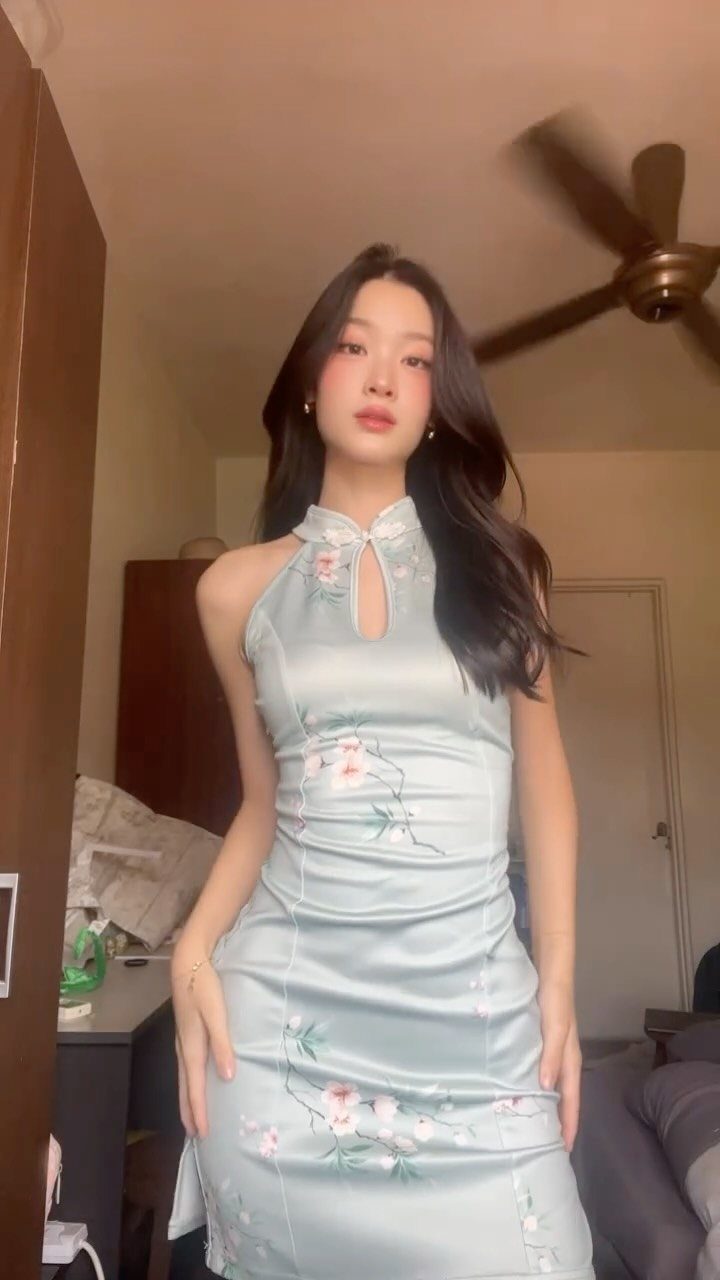
A light blue satin qipao with floral embroidery and a keyhole neckline is a form-fitting dress, so fit matters more than anything else about it.
Try it on sitting down as well as standing, since a close cut shows every problem when you move.
Satin gives the dress a soft shine, and the embroidery keeps it from looking plain. For a dressy occasion, this is the one I’d choose over the jackets.
4. Frog Button Track Jackets
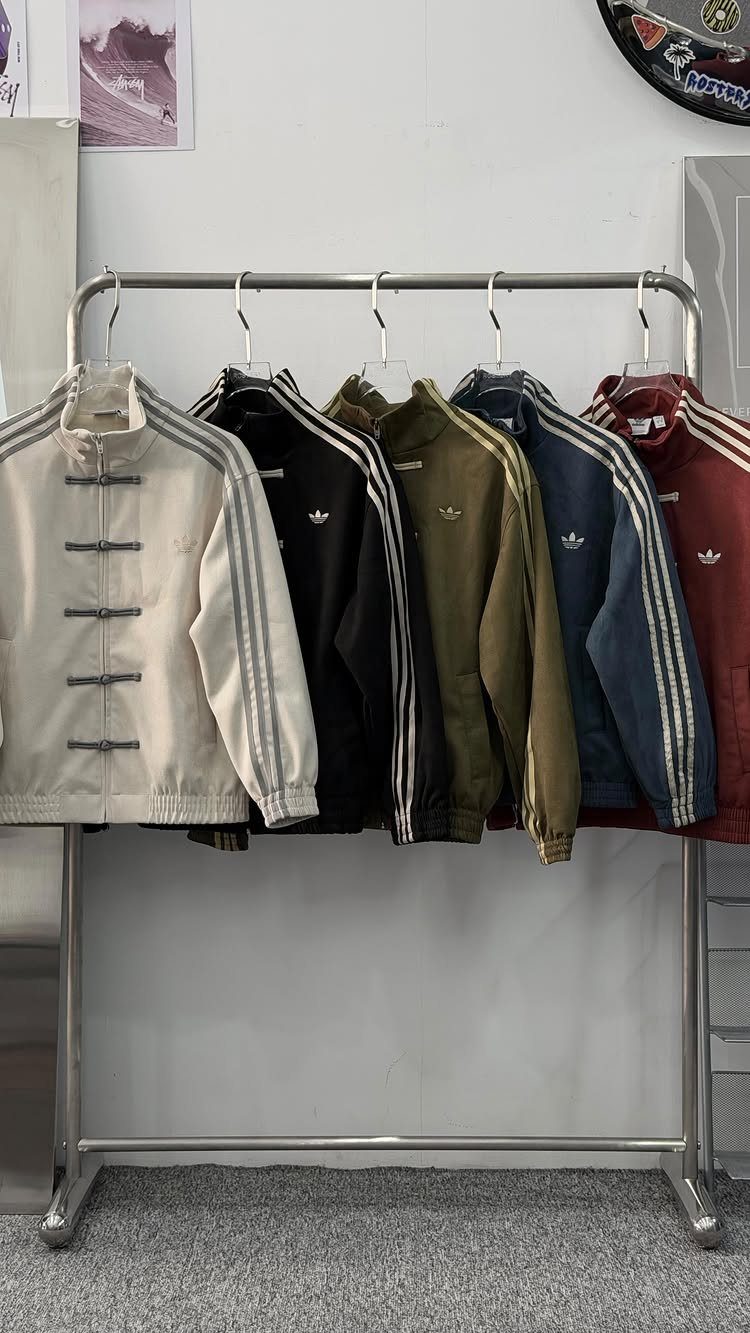
Frog buttons on a track jacket mix sportswear with Chinese detailing, which makes it the casual pick for everyday wear. The rack shows cream, black, olive, navy, and maroon, so you can match it to what you already own.
Cream is the boldest choice and shows the buttons best. Navy or black is safer if you want it to blend in with jeans and sneakers.
5. Embroidered Mandarin Collar Jackets
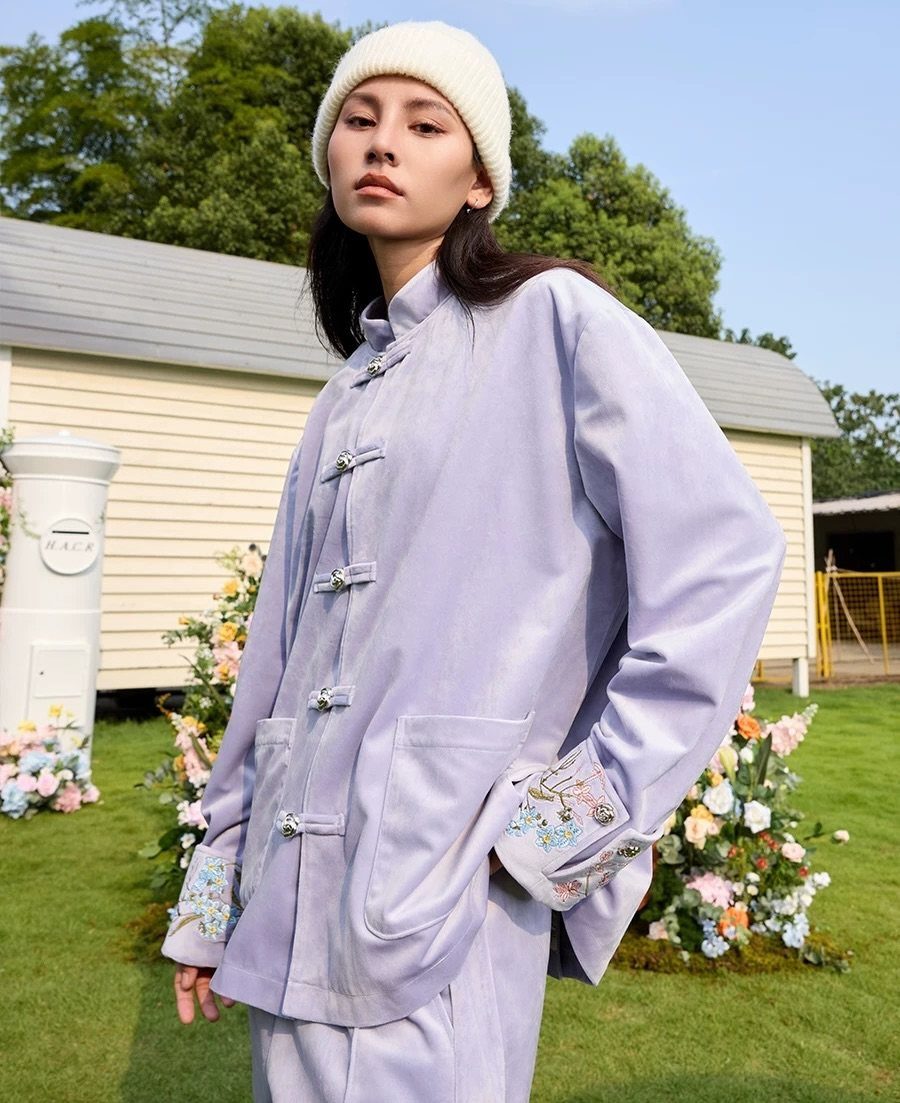
A light purple jacket with frog closures and embroidered cuffs puts the decoration where your hands are, so it gets noticed without a loud pattern.
Matching pants turn the jacket into a full set, and a plain white beanie keeps the look relaxed.
Soft pastel color makes this easy to wear in daytime. I’d skip busy accessories and let the cuffs carry the outfit.
Cultural Significance of Clothing
Chinese clothing carries more than 3,000 years of history, and the long, loose, straight-cut jackets, pants, and gowns it grew from still shape what you see today.
Over the centuries, those silhouettes carried shifting ideas about beauty, philosophy, and where people stood in society.
Every dynasty and every ethnic group added something of its own to the way people dressed, and you can still spot those marks today. Learning a few garment names makes period dramas and festival photos easier to read.
That helps when you shop. A piece with a clear lineage, like a cross-collar robe or a frog-button jacket, is easier to wear with confidence once you know where the shape came from.
Influence of Media
Period dramas are a big reason Hanfu caught on.
Look for robes that cross at the collar, wide sleeves, ties or sashes where buttons would be, and clothes worn in layers. Knowing those 4 details helps you tell historically grounded pieces from costume-style ones.
Social media pushed it further.
If a show sparks your interest, borrow that approach: one historical element, styled with everyday pieces.
Modern Adaptations
Embroidery and silk are the details most often borrowed from tradition for modern pieces, and they make the clothes easy to wear every day.
Embroidery and silk are the two to look for, and either one can carry a simple outfit.
My advice is to pick one detail per outfit and keep everything else plain. Silk or embroidery on a single piece looks refined; both on top of a loud pattern starts to look busy.
Many people in China now look to what their ancestors wore as a way to honor their heritage, so I see these pieces as a living style and not a one-time costume.
Buy the one that feels meaningful to you, and you will keep wearing it.
Frequently Asked Questions
What is Hanfu?
Hanfu literally translates to "Han clothing," the historic dress of China’s Han people, and it predates every other traditional Chinese style I know of.
Spot it by the wrap-front robe, the generous sleeves, the sash or cord standing in for buttons, and the habit of piling one garment over another. Today people mostly wear it for festivals, weddings, and photo shoots.
What is the difference between qipao and Hanfu?
The qipao is a close-cut dress with a stand-up collar, and it traces back to Manchu women during the Qing dynasty.
Hanfu came well before it: roomy, layered, and wrapped across the chest, it belongs to the Han people of earlier dynasties.
If you want a close cut for a dressy night, pick the qipao; if you want a historical look, pick Hanfu.
How has traditional Chinese clothing evolved?
Over 3,000 years the basic shape stayed loose and straight-cut, in jackets, trousers, and long gowns, and every dynasty left its own small mark on it.
Modern pieces keep details like embroidery, silk, mandarin collars, and frog buttons, then mix them into everyday clothes such as track jackets and matching sets. I suggest using one traditional detail per outfit so it stays refined and not busy.