
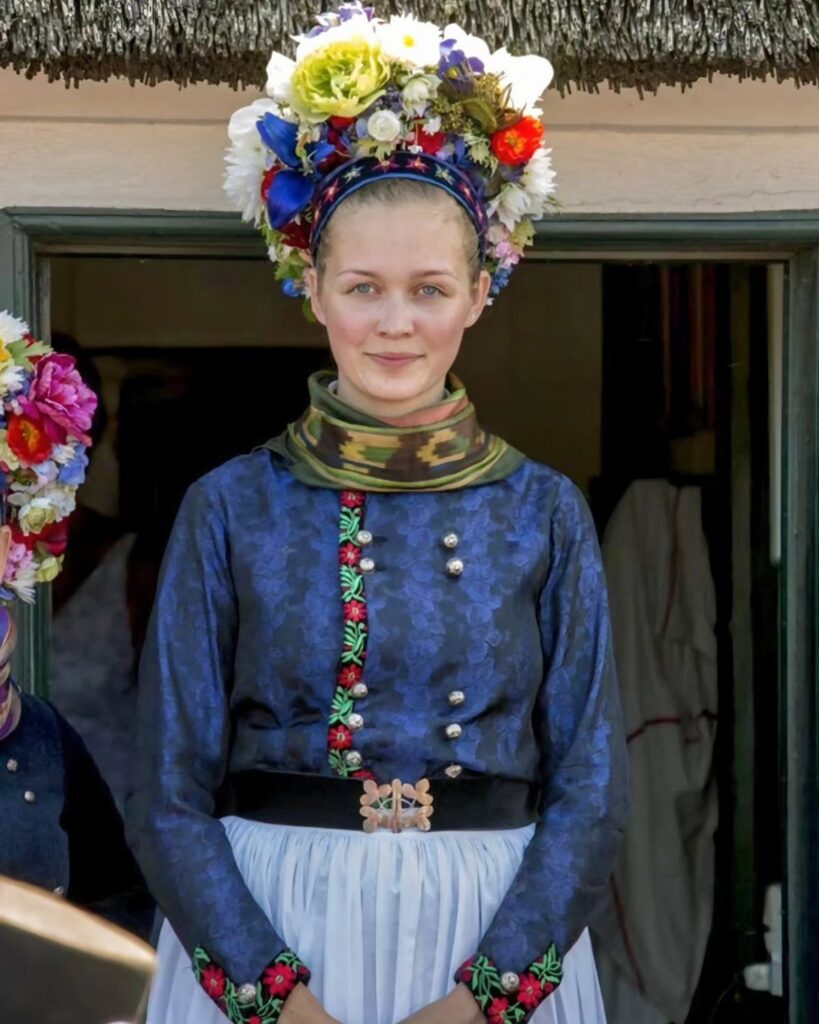
Denmark has no single national costume, so the first question is which region a piece comes from, and that decides more than any dress or jacket does.
The list runs from a women’s dress and apron, through bonnets and kerchiefs, to a men’s red jacket with a knitted cap, and ends with the clean-lined labels Danes wear now.
A black apron with gold embroidery in one district can look nothing like the set from the next one over.
1. Women’s Traditional Dress and Apron
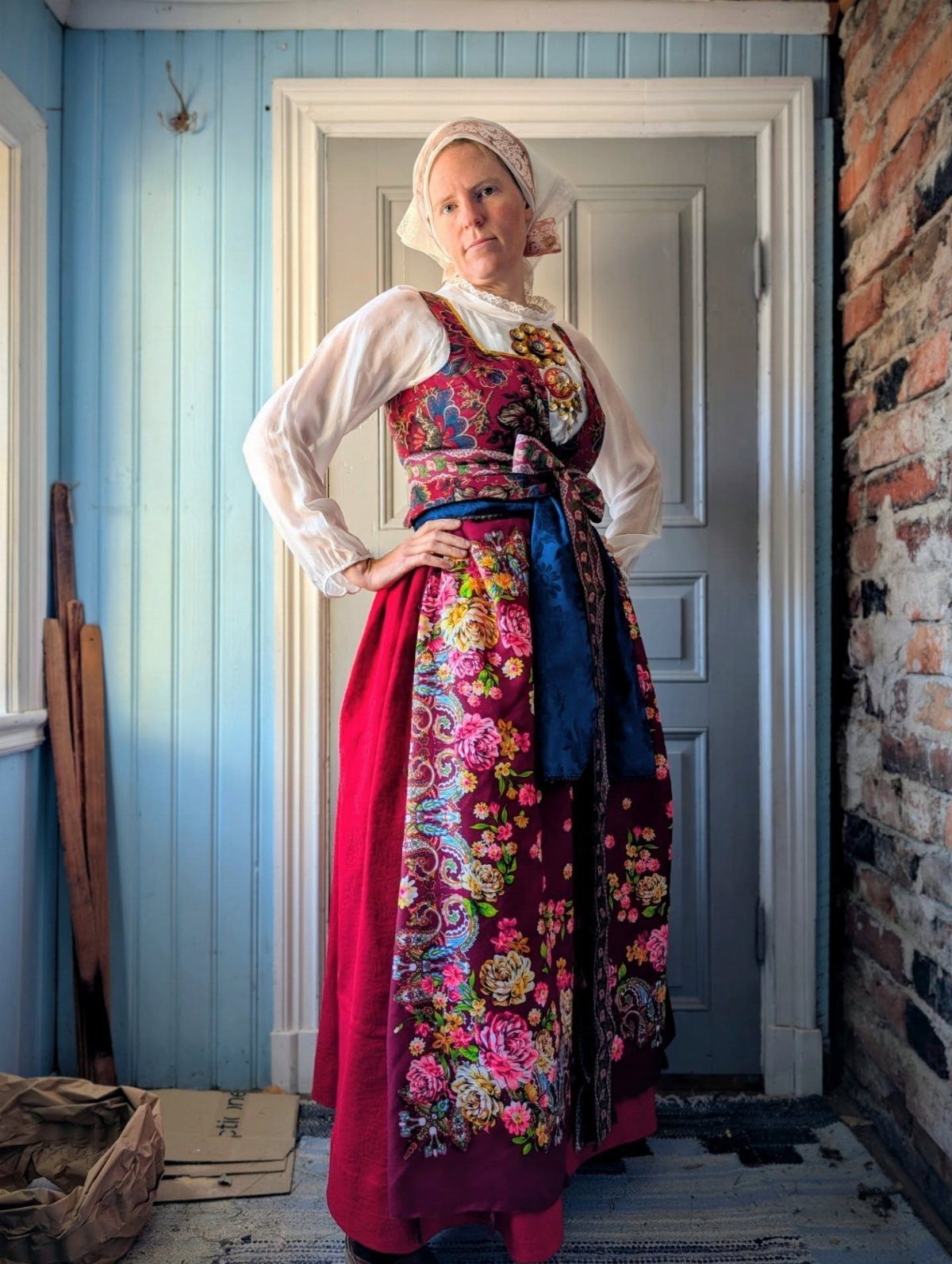
A Danish woman’s outfit is built in layers: a white blouse, a dress, and an apron, with a headscarf or bonnet to finish.
The floral apron is the piece I would look at first, since it carries the color and pattern against a plainer dress.
Before calling a set a full outfit, check that every piece is there: bodice, skirt, apron and headwear, since a listing with one missing is only part of the look.
The accessories are what make it read as traditional rather than just a floral dress.
2. Bonnets and Kerchiefs Headdresses
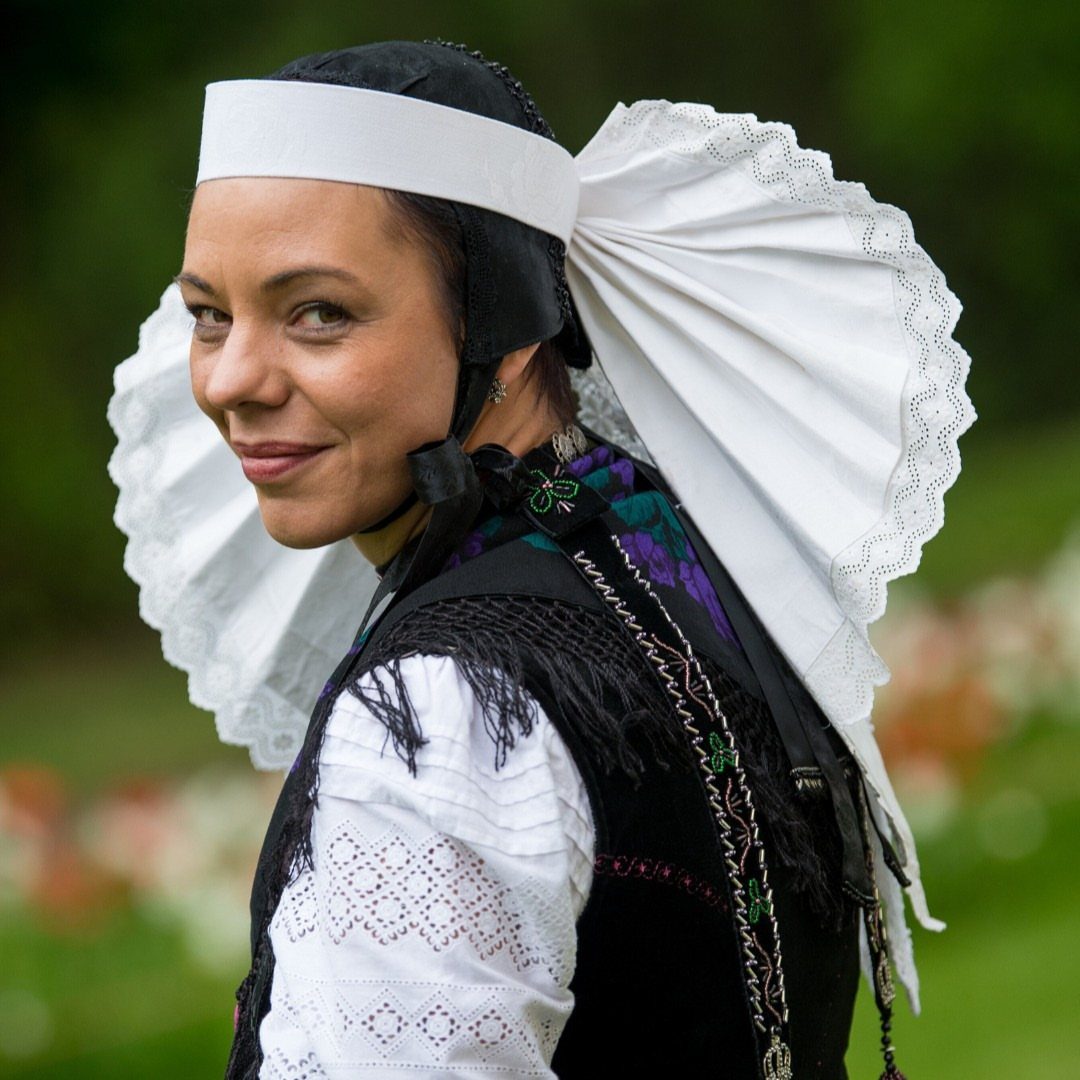
Headwear tells you more than almost any other piece, because women’s headdresses came in many forms and each one meant something.
A big white pleated lace bonnet, worn with a black vest, makes a much louder statement than a plain kerchief tied at the head.
For anyone researching, I would study headdresses before anything else. The shape of the cap is a quicker clue to the costume than the dress beneath it.
3. Danish Fashion & Traditional Clothing
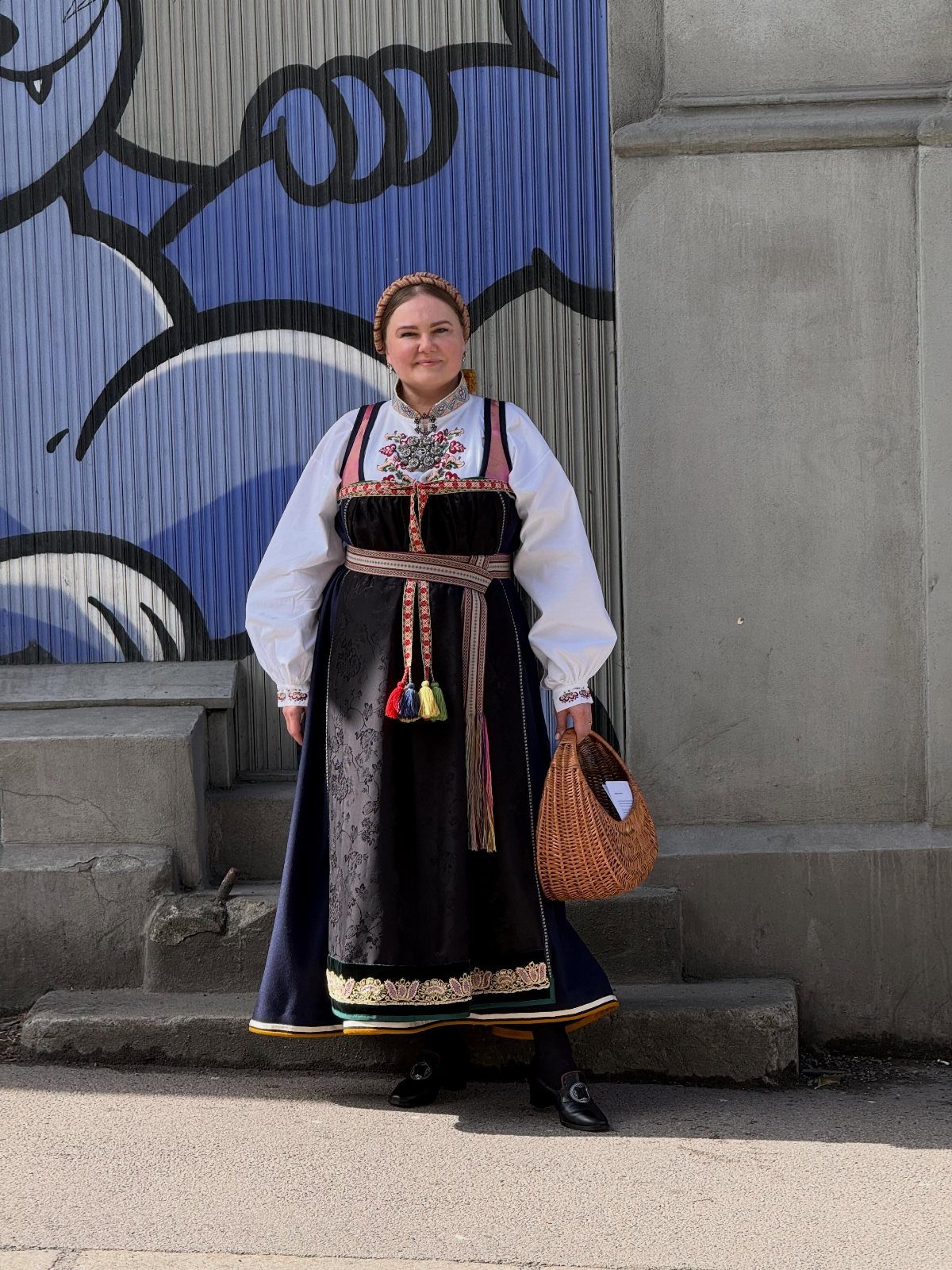
Denmark has no single national costume.
Each region has its own version, and the styles trace back roughly 250 years, so a black apron with gold embroidery, a white blouse and a headband in one district can look nothing like the set from the next one over.
If time is short, treat this as the rule: ask which region a costume comes from before judging it. A wicker basket, as seen here, is an easy accessory to add for a more complete look.
4. Men’s Red Jacket and Knitted Cap
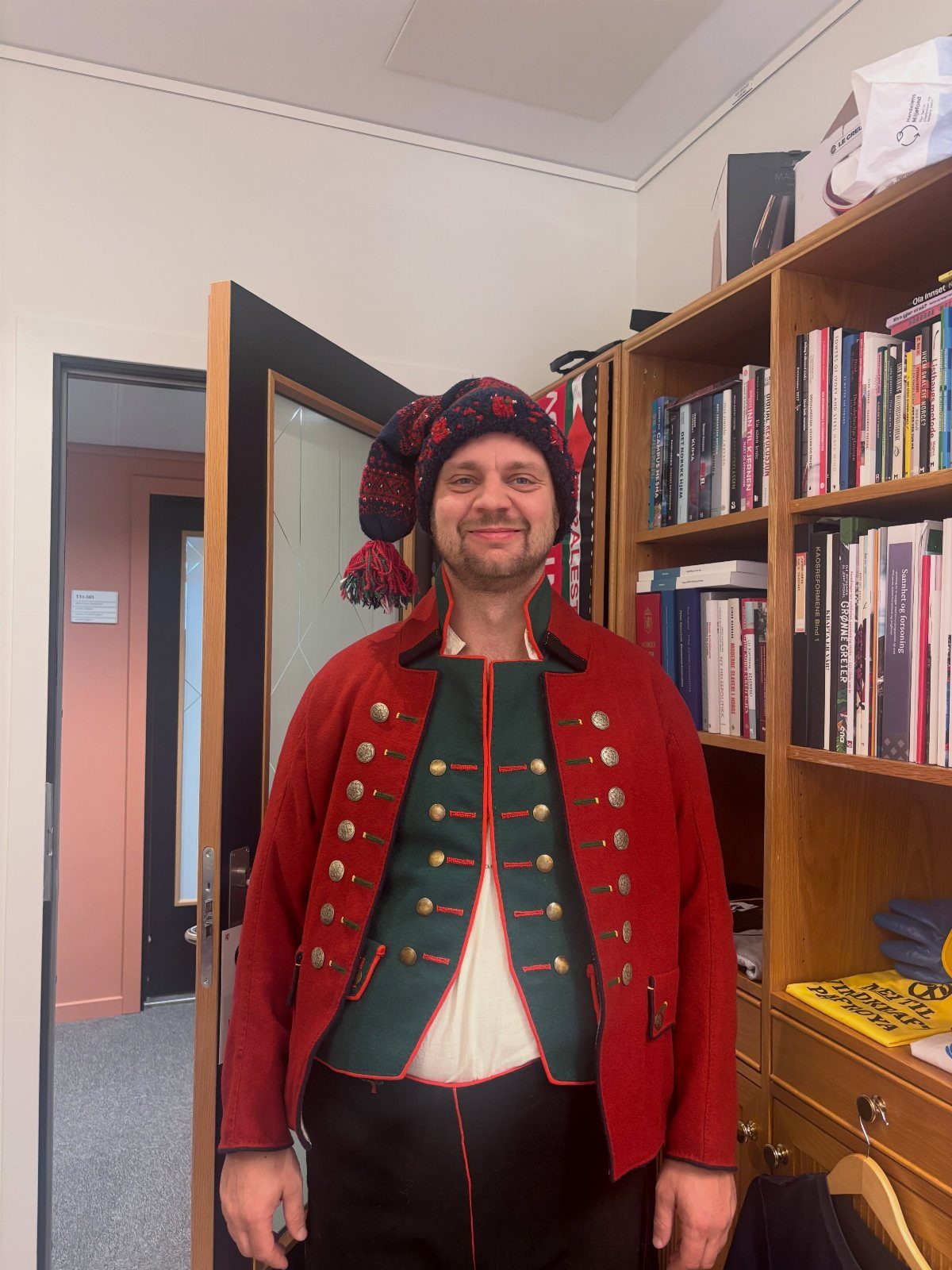
Men’s dress is the boldest of the set: a red coat over a green vest, black trousers, and a knitted stocking cap topped with a tassel. The knitted cap is the detail people remember.
That red and green pairing is the quickest way to spot the men’s outfit. I like it because the colors do the work, and nothing about it needs explaining.
Modern Danish Fashion
If you want to see what Danes wear now instead of what they wore 250 years ago, those are the months when designers gather there.
4 brands to look up: InWear, Carli Gry, Red & Green and Huset Sand.
Those 4 labels are recognized well beyond Denmark, and the clothes match daily life there: clean lines, a modern cut, and enough ease to wear on a bike, since so many people in the city get around that way.
For a closet piece, I would judge it by that same standard. Danish style blends comfort with elegance, so a good test is whether you could pedal to work in it and still look put together.
Parents shopping for themselves can use this as a filter. Pick pieces that move easily and stay neat, and skip anything that only looks good standing still.
Frequently Asked Questions
Which are the traditional clothes of Denmark?
Since Denmark never settled on one national costume, what counts as traditional changes from region to region.
Women wore a white blouse, a dress, an apron and a bonnet or headscarf. Most pieces were made at home from wool or flax, and both fibers held up well against the cold.
What are some popular clothing brands in Denmark?
4 labels to look up are InWear, Carli Gry, Red & Green and Huset Sand.
All 4 are recognized well beyond Denmark. Their clothes match daily life there: simple shapes that move easily and still look neat.