
Dressing a newborn for sleep means matching layers to room temperature, checking the back of the neck instead of cold hands, and knowing when to swap a swaddle for a sleep sack.
Most parents guess wrong on the first layer or miss the signs of overheating, which happens fast because newborns lose heat up to four times faster than adults and cannot cool themselves down once they start sweating.
1. Check the Room Temperature First
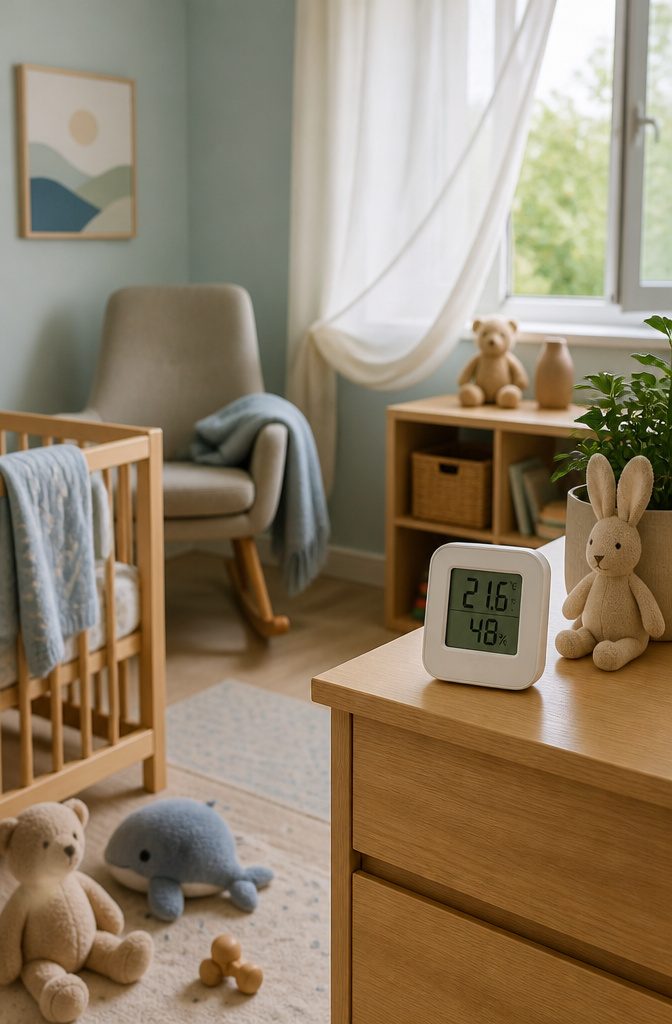
Room temperature decides what your newborn wears to bed before you ever open a drawer. The ideal range is 68–72°F (20–22°C), and keeping the nursery in that zone reduces the risk of overheating while supporting more restful sleep.
Overheating has been linked to an increased risk of SIDS, so major pediatric guidelines, including those from the American Academy of Pediatrics, emphasize keeping babies from getting too warm rather than adding extra layers.
A reliable thermometer in the nursery gives you a clearer picture than guessing based on your own comfort.
You do not have to hold one exact number all night, but knowing where the room sits lets you dress appropriately instead of compensating for a warm space with heavier clothing or stripping layers in a cooler one.
Summer and winter can make that range harder to hit, so a box fan helps air circulate when the temperature climbs.
2. Start With a Lightweight Onesie
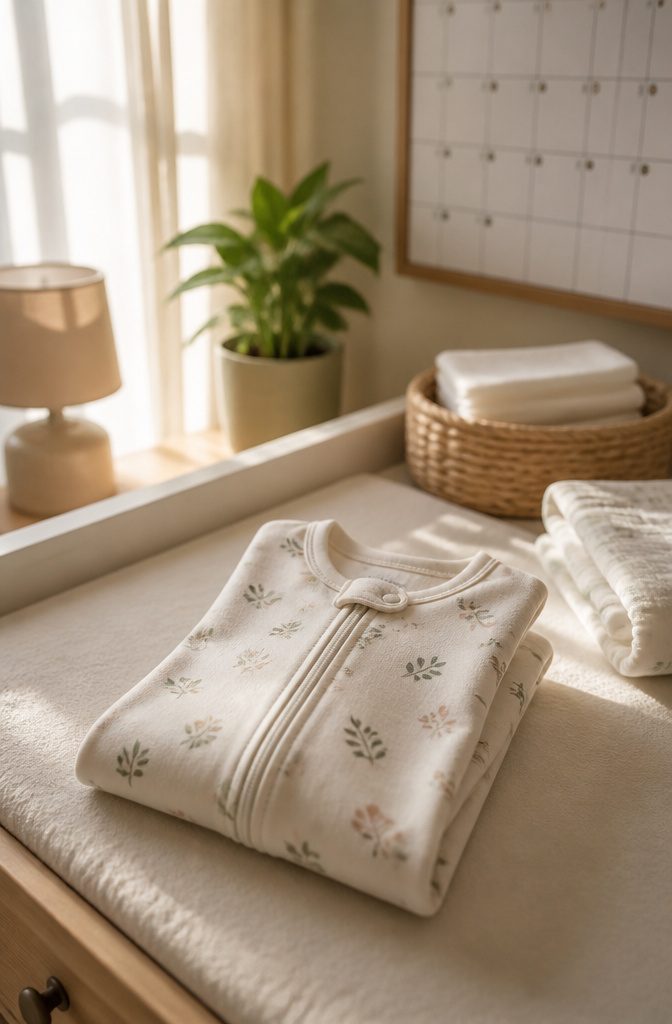
The base layer sits right against the skin, so a breathable onesie or bodysuit in organic cotton, bamboo, or muslin handles that job best.
Bamboo stays naturally cool to the touch and wicks moisture better than cotton, which makes it the top pick if the room runs warm or humid.
Cotton still works if it’s lightweight, though it holds more moisture when things heat up. Muslin allows great airflow but can stiffen after a few washes.
Short-sleeve versus long-sleeve comes down to room temperature.
A short-sleeve bodysuit works in a room between 74–77°F, and you can drop the sleeves entirely if the room climbs past 78°F. Long sleeves make sense once the temperature drops to 70–73°F, though pairing a short-sleeve onesie with a swaddle or sleep sack often covers that range without adding a second fabric layer directly on the skin.
Skip polyester and fleece entirely. They trap heat instead of letting it escape, which leads to sweating and heat rash faster than most parents expect.
3. Add a Swaddle or Sleep Sack as Needed
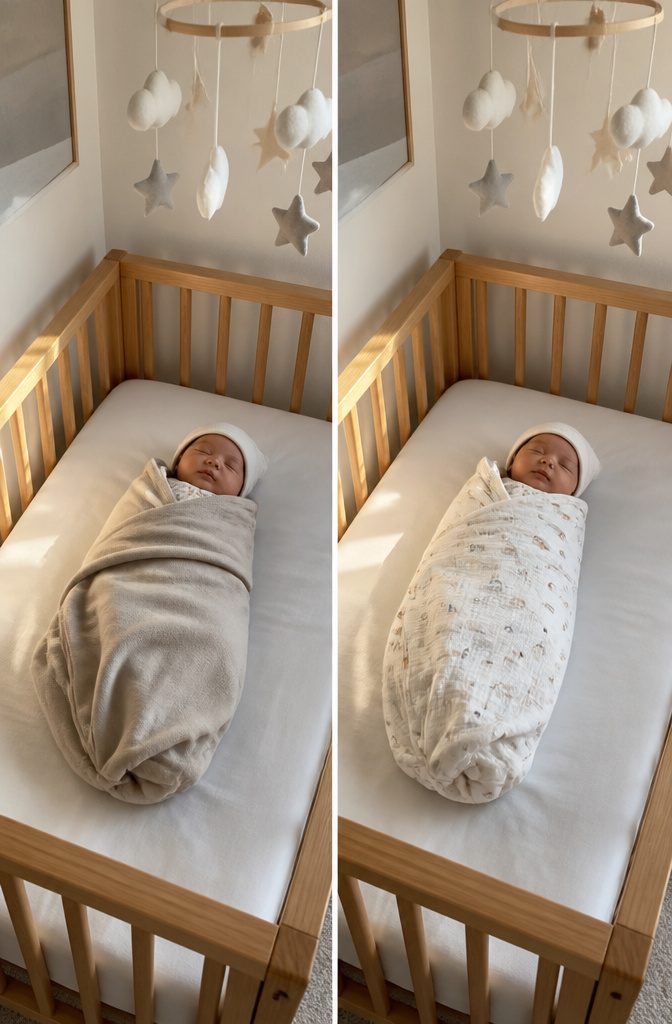
Swaddles work best in the first weeks when the startle reflex keeps waking a baby up.
That involuntary jerk happens when a newborn feels sudden movement or sound, and swaddling mimics the snug hold of the womb enough to dampen it.
Studies show swaddled babies sleep longer stretches, though not every baby tolerates it the same way.
Traditional muslin or cotton swaddles are thin and breathable, but they take practice to wrap securely. Ready-made swaddles with wings or zippers make the job faster.
Sleep sacks replace swaddles once a baby starts rolling, usually around eight to twelve weeks.
They cover the body without pinning the arms, which matters for safety when a baby can shift position. The American Academy of Pediatrics advises against loose blankets in the crib, and a wearable blanket solves that without adding risk.
Cooler rooms below 68 degrees Fahrenheit call for a thicker sleep sack or an extra layer underneath, while rooms at 72 degrees or warmer need only the sack over a light onesie.
4. Check the Back of the Neck for Temperature
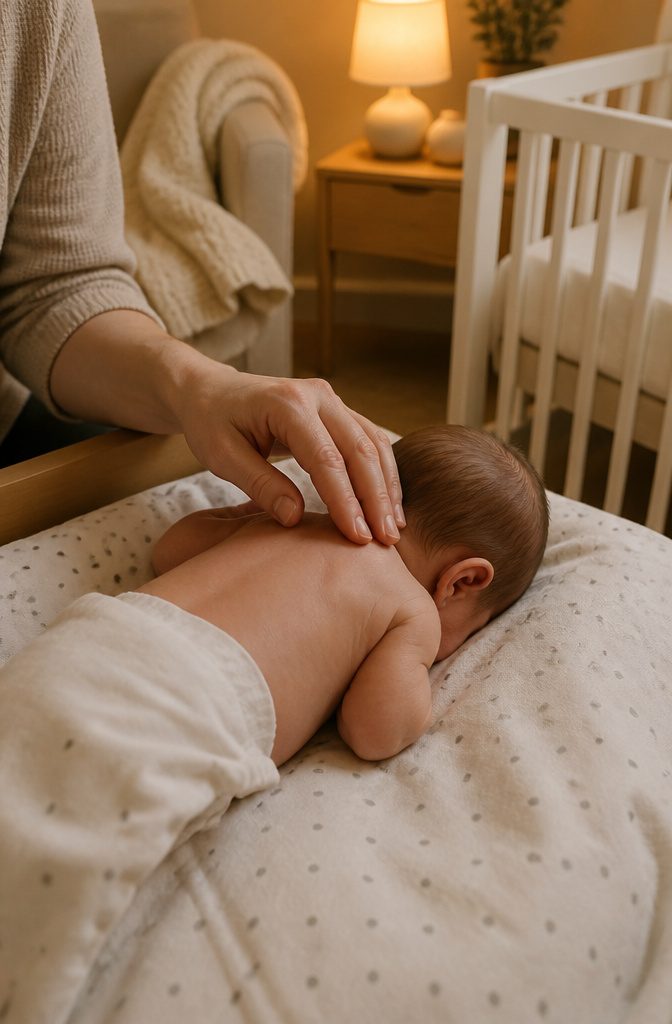
Hands and feet feel cool on almost every newborn because circulation is still catching up, so checking those spots will mislead you every time. Touch the back of the neck or the chest instead.
Skin that feels sweaty or hot means you overdressed. Skin that feels cool to the touch, especially paired with fussiness, means it’s time to add a layer or bring in a swaddle.
Overheating shows up in other ways too.
Flushed cheeks, rapid breathing, and damp hair all signal that the baby is holding too much heat. You might also see restlessness during sleep or tiny red bumps on the neck or chest where a heat rash is starting.
A baby who is too cold will feel cool on the chest or stomach and may wake frequently without settling back down.
I check the back of the neck at every bedtime and again during overnight check-ins. It takes three seconds and catches the problem before it disrupts sleep.
5. Adjust Layers Based on How the Baby Feels
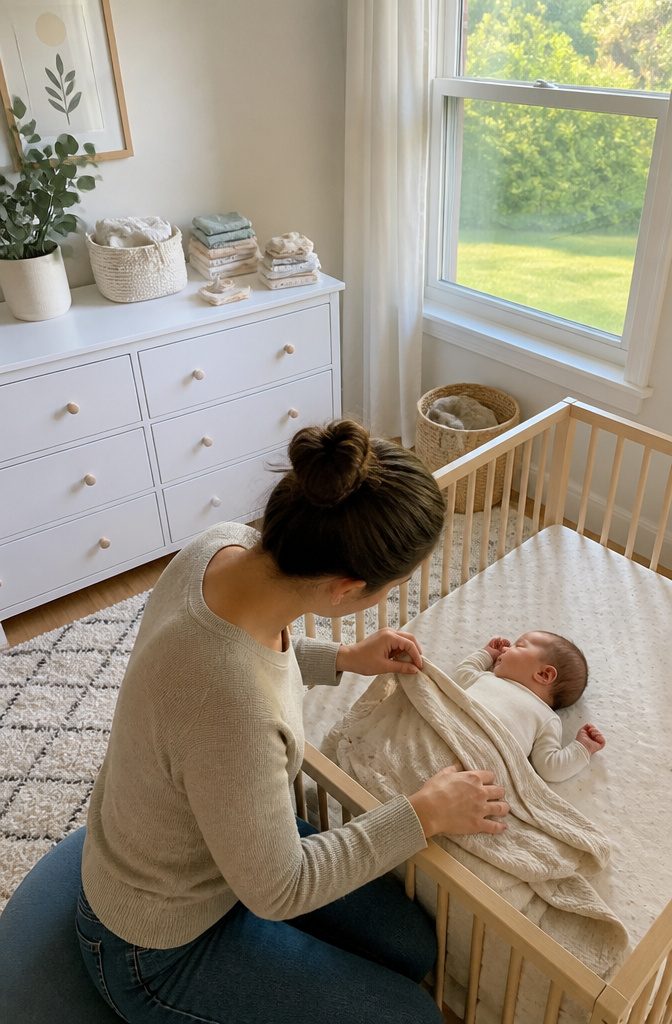
Check the back of the neck or chest to decide whether to add or remove a layer. Hands and feet run cooler than the rest of the body because circulation is still immature, so they give you the wrong read.
If the neck feels sweaty or hot to the touch, take off a layer. Cool skin plus fussiness means the baby needs more warmth.
Babies lose heat up to four times faster than adults, so small shifts in room temperature hit harder than you expect.
A short-sleeve bodysuit that worked in the morning might leave the baby overdressed by afternoon. Adjusting layers throughout the day is normal.
Watch for overheating signs: damp hair, rapid breathing, flushed cheeks, or tiny red bumps on the neck or chest.
If the baby feels hot or is breathing unusually fast, remove a layer immediately. Babies with a fever or cold should not be bundled up past what the room temperature calls for.
6. Keep the Crib Clear of Loose Bedding
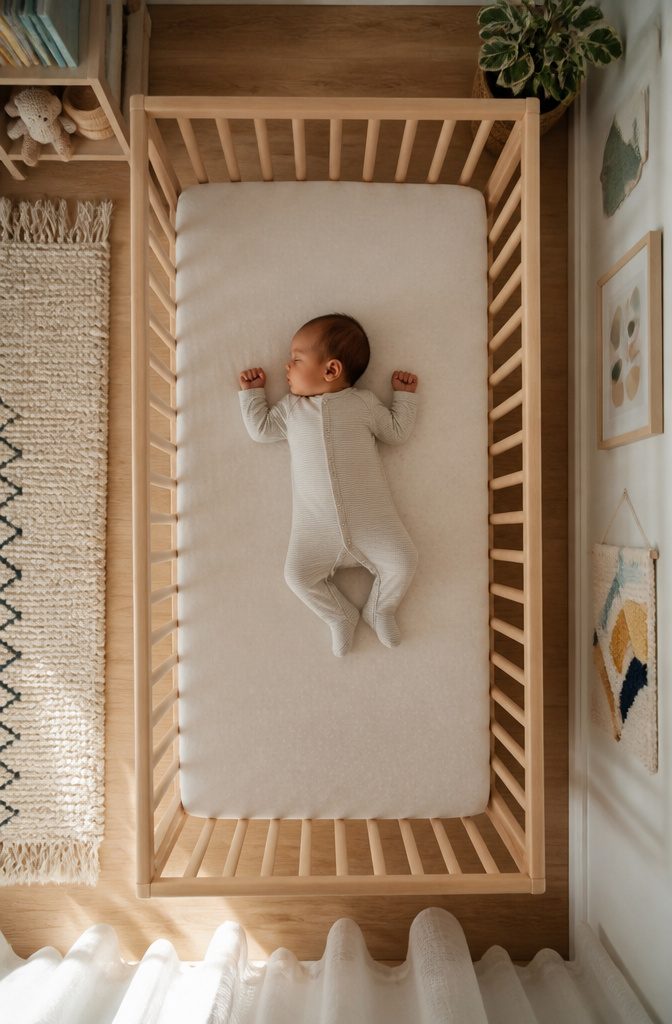
No loose blankets, pillows, or soft items belong in the crib.
That rule exists to reduce suffocation risk, and it shapes every choice about how you dress a newborn for sleep. If blankets are off the table, the clothing has to do all the work.
Place the baby on their back to sleep on a firm mattress with a snug fitted sheet.
Avoid soft mattresses and loose objects entirely. Overheating is considered a risk factor for sudden infant death syndrome, so the impulse to pile on layers or tuck in a blanket works against safety rather than supporting it.
The absence of blankets is why sleep sacks and swaddles exist. Footie pajamas or a onesie paired with a wearable blanket keeps a newborn warm without introducing loose fabric into the sleep space, regardless of room temperature.
Breathable Fabrics That Regulate Temperature
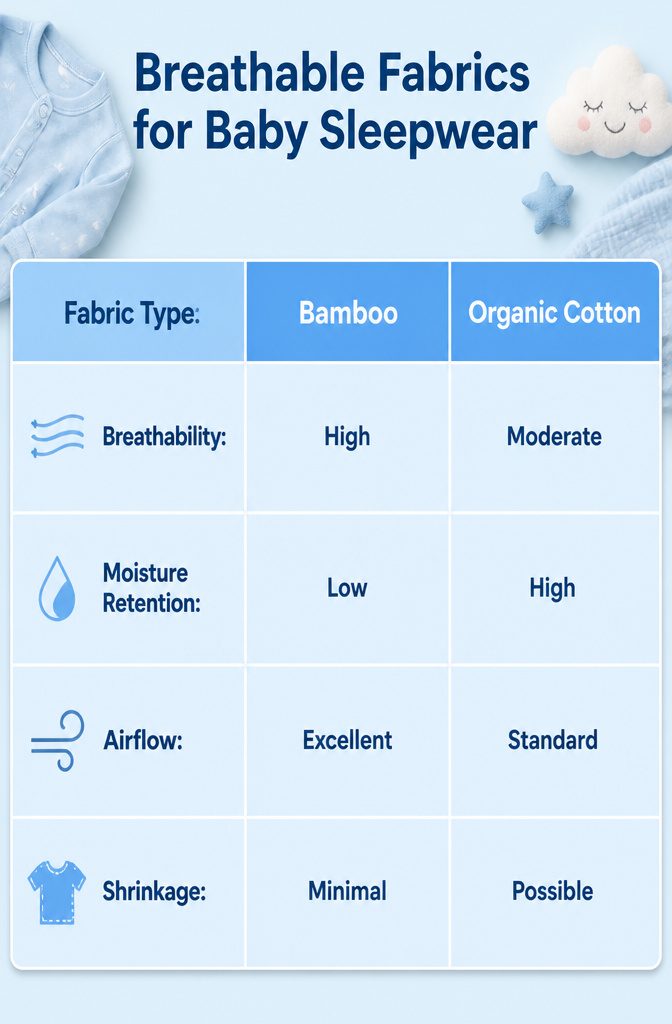
Newborns can’t regulate their body temperature the way older children or adults can, so the fabric you choose matters as much as how many layers you put on.
Their small bodies trap or lose heat fast, which is why breathability ranks above warmth when picking sleepwear.
The fabrics that work best:
- Bamboo: Breathable, moisture-wicking, and naturally cool to the touch. It stays dry even in humid conditions and regulates temperature better than most other materials.
- Organic cotton: Soft, absorbent, and a solid choice if it’s lightweight. It retains more moisture than bamboo in humid weather but still allows heat to escape.
- Muslin: Loosely woven cotton that allows great airflow. Often used for swaddles. It can shrink or stiffen over time.
Skip polyester, fleece, or blends that don’t breathe. They trap heat, cause sweating, and can lead to heat rash or overheating during sleep.
Swaddles Versus Sleep Sacks Versus Footed Pajamas
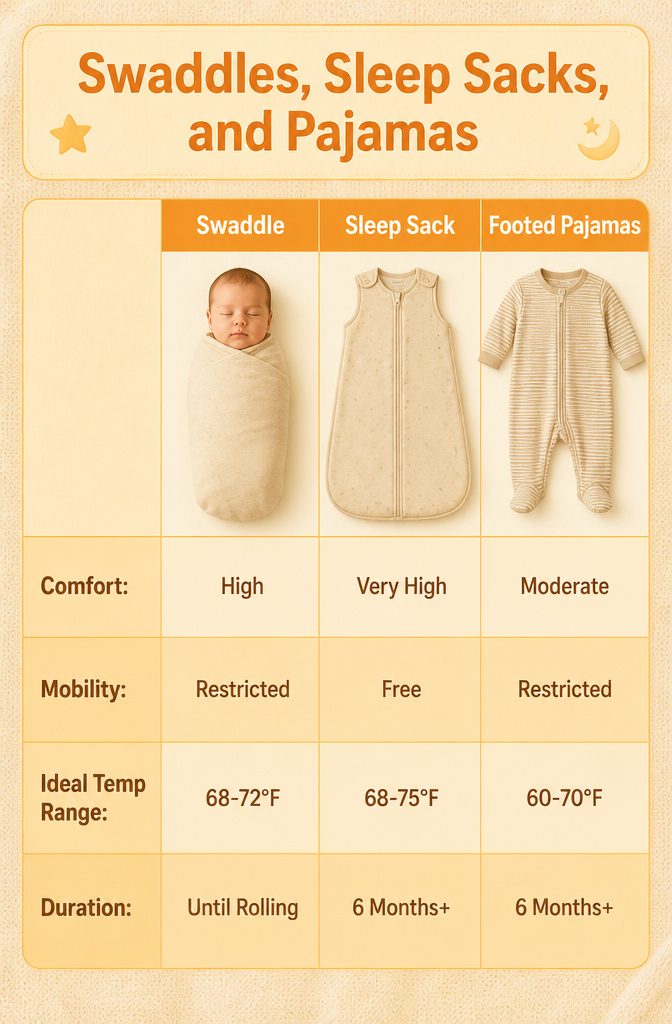
Swaddling kept my first newborn calm for the first six weeks, but I had to stop as soon as she showed signs of rolling, which for her was just past two months.
Some babies roll earlier, and once they do, a swaddle becomes unsafe. The general window is between two and four months, but the baby decides the timeline, not the calendar.
After swaddling stops, sleep sacks take over.
They give warmth without restricting arm movement, and the American Academy of Pediatrics backs them as the safe alternative to loose blankets. In a room between 68 and 72 degrees, a long-sleeved onesie under a sleep sack works for most newborns.
If the room is warmer, above 75 degrees, footed pajamas alone can be enough, or skip the onesie and go with just a diaper under a lightweight sleep sack made from muslin or bamboo.
Footed pajamas paired with a sleep sack work well in cold weather, layering warmth without bulk. The general rule is one more layer than what a comfortable adult would wear in the same room.
Signs Your Baby Is Too Hot or Too Cold
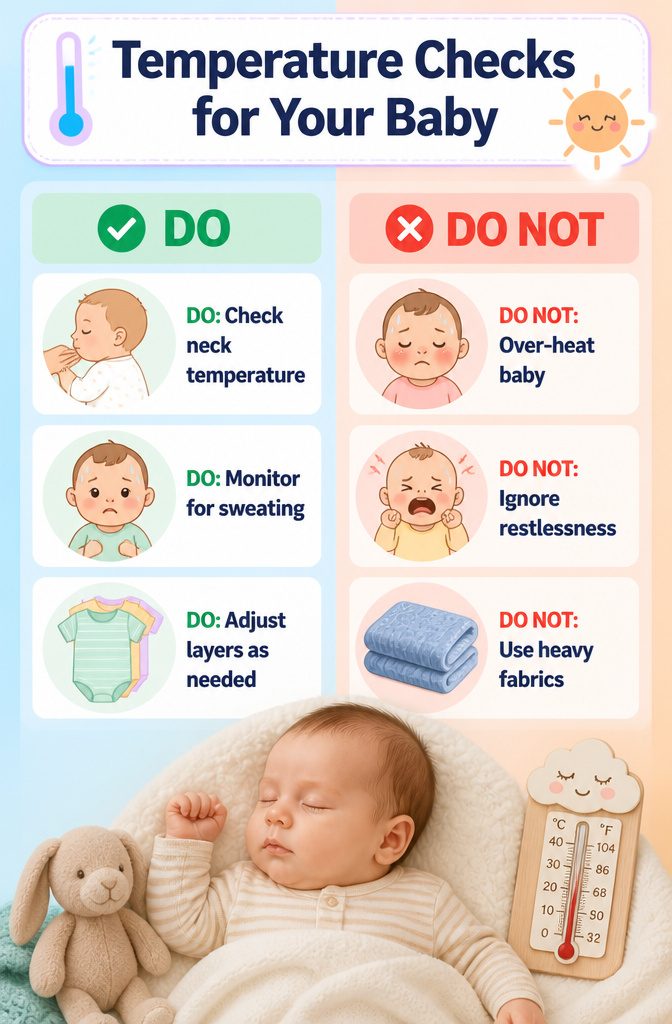
Check the back of the neck or chest when you want to know if your baby is sleeping at a comfortable temperature. Hands and feet run cooler naturally because newborn circulation is still immature, so they will mislead you.
Touch the back of your baby’s neck or the skin on their chest.
If it feels sweaty or hot to the touch, remove a layer. Cool skin paired with fussiness means you need to add one.
Overheating looks like this:
- Flushed cheeks
- Sweating, especially on the neck or back
- Rapid breathing
- Damp hair
- Restlessness or poor feeding
- Heat rash (small red bumps, often on the neck or chest)
A baby who is too cold will feel cool to the touch on the torso and may seem lethargic or less responsive than usual.
I adjust layers throughout the day. A short-sleeve bodysuit works in the morning, but by afternoon I might strip down to just a diaper and swaddle if the room has warmed up.
How Newborns Regulate Temperature Differently
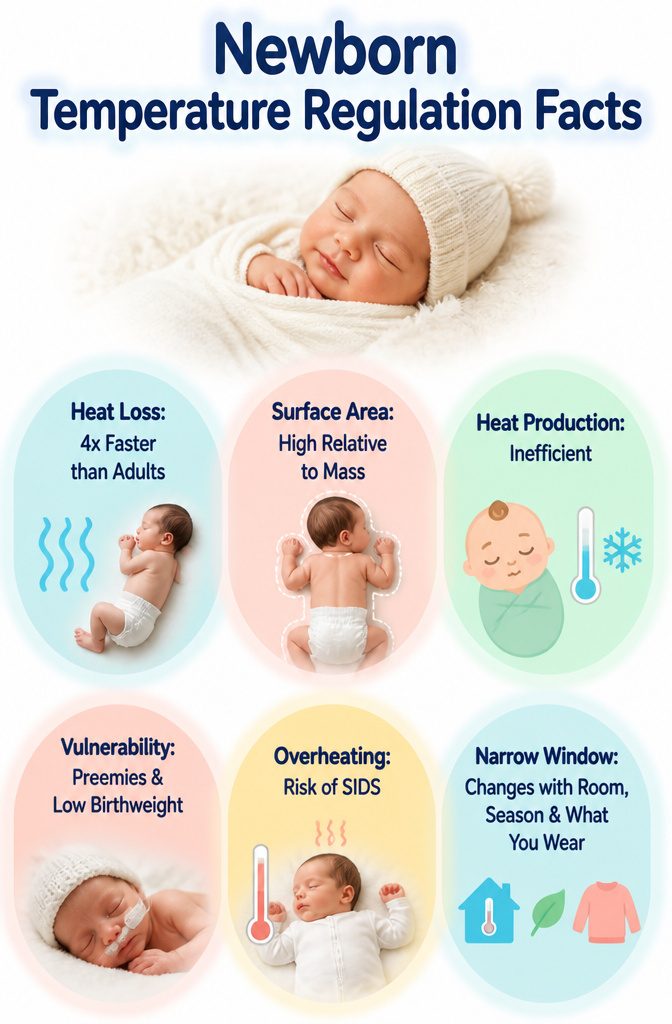
Newborns lose heat up to four times faster than adults, which makes every layer you add or skip more consequential than it feels.
Their sweat glands are not fully developed yet, and their high surface area relative to body mass means they cannot hold onto warmth the way older babies or adults do.
They also cannot generate heat efficiently when they get cold. Cold stress forces them to burn energy and oxygen just to stay warm, which is why premature babies and those with low birthweight are especially vulnerable.
Overheating brings its own danger. Because newborns cannot cool themselves down quickly, too many layers or a warm room can raise their body temperature faster than you expect.
Overheating during sleep has been linked to an increased risk of sudden infant death syndrome, which is why pediatricians consistently recommend dressing babies slightly cooler rather than too warm.
The window between too cold and too hot is narrow, and it shifts with the room, the season, and what you are wearing yourself.
Frequently Asked Questions
What should a newborn wear to sleep?
A breathable onesie or bodysuit paired with a swaddle or sleep sack covers most newborns safely. The fabric matters as much as the layers: stick with bamboo, organic cotton, or muslin that lets heat escape instead of trapping it.
In rooms between 68–72°F, a long-sleeved onesie under a sleep sack works well, while warmer rooms above 75°F may need only a short-sleeved bodysuit or footed pajamas alone.
How do I know if my baby is too hot or too cold?
Touch the back of the neck or chest to get an accurate read. Sweaty or hot skin means you need to remove a layer, while cool skin paired with fussiness signals the baby needs more warmth.
Hands and feet run cooler naturally because circulation is still developing, so checking those spots will mislead you every time.
When should I stop swaddling my baby?
Stop swaddling as soon as your baby shows any signs of rolling, which can happen anywhere from 2 to 4 months.
Once a baby can shift position, a swaddle becomes unsafe because it restricts arm movement. Switch to a sleep sack at that point, which keeps the baby warm without pinning the arms.
What is the ideal room temperature for a baby’s sleep?
The recommended range is 68–72°F (20–22°C). Keeping the nursery in that zone reduces the risk of overheating while supporting better sleep.
A reliable thermometer gives you a clearer picture than guessing based on your own comfort, and a box fan helps when summer heat pushes the temperature higher.
Can I use a blanket for my baby while they sleep?
No loose blankets belong in the crib. That rule exists to reduce suffocation risk, which is why sleep sacks and wearable blankets replace traditional bedding entirely.
The American Academy of Pediatrics advises against loose blankets, pillows, or soft items in the sleep space, so the clothing has to handle all the warmth a newborn needs.